What this job involves and what it costs
Extra socket or replacement switch installations from £55–£75 (VAT, parts, labour and certification included). Serving Maidstone and surrounding areas including Bearsted, Boxley, Earl Street and Allington. All work is installed and tested to current wiring regulations, fully certified where required, with a written fixed price and a workmanship guarantee.
When you need it
- A socket cracks, scorches, buzzes or feels warm when you plug something in.
-
This usually means the socket is damaged or overloaded and needs checking or replacing.
-
A socket works sometimes or trips your appliances intermittently.
-
That often indicates a loose connection or a failing component that needs diagnosing.
-
Your lights flicker or dim when you switch the kettle, cooker or other big appliance on.
-
This commonly shows the circuit is under strain or there's an issue with the wiring or protective devices.
-
You have to run extension leads around furniture or across the room because there aren’t enough sockets where you need them.
-
That normally means sockets are poorly placed and you need additional sockets to prevent unsafe temporary wiring.
-
Your bedside or desk plugs don’t reach or you have tangled chargers everywhere.
-
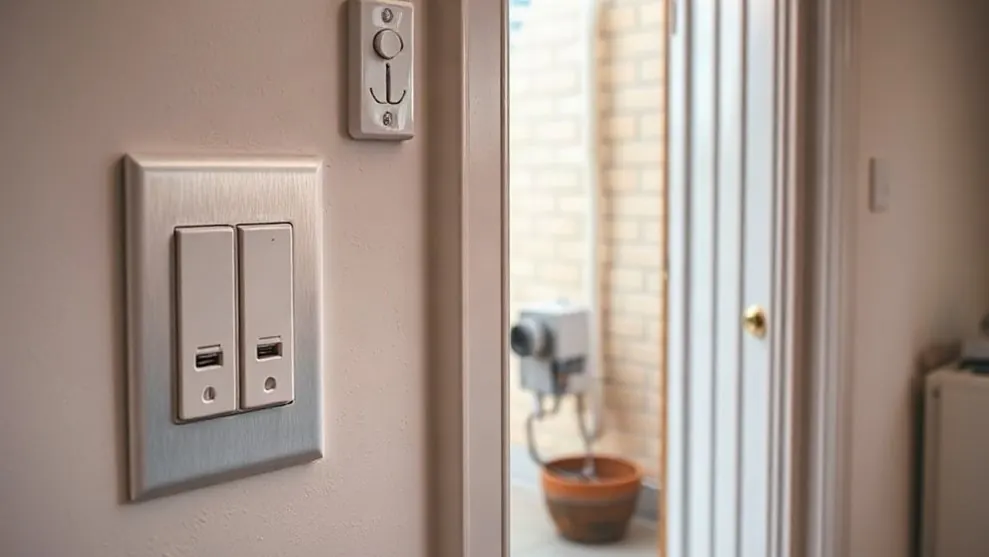
This typically points to a need for extra sockets, USB sockets, or better socket placement for convenience.
-
Outdoor power points are exposed to the weather or don’t have a cover.
-
That usually means they need weatherproof fittings and proper RCD protection to be safe.
-
Older parts of the house make sockets unreliable or you notice discoloured plates and old wiring nearby.
-
That often suggests aged wiring that should be inspected and possibly upgraded for safety.
-
A socket or switch is loose in the wall when you touch it.
-
This generally indicates the accessory needs tightening or replacement and the circuit should be checked.
-
You’ve been relying on an extension lead as a permanent fix behind a TV or desk.
-
That commonly means you need a new fixed socket where the appliances are used to avoid overheating and fire risk.
-
You get a tingling sensation or mild shocks from a plug or appliance when you touch it.
- This usually signals an earth or insulation fault and requires immediate inspection by an electrician.
What it costs in Maidstone
Socket and switch work in Maidstone is priced clearly with fixed written quotes and includes VAT, parts, labour, testing and certification where shown. Below are typical job prices and what’s included.
| Job | Price | What's included |
|---|---|---|
| Extra sockets | £55–£75 | Parts, fitting, testing, certificate |
| Smart switches | Quoted per job after a free survey | Compatible equipment, installation, testing |
| Garden lighting | Quoted per job after a free survey | Suitable fittings, protection, testing |
| Labour (hourly) | £80 per hour | Installation and labour (fault finding usually 1–2 hours) |
| Kitchen upgrades | Quoted per job after assessment | Circuit capacity check and protective device assessment |
Not included: plaster and decoration, asbestos removal, DNO supply-upgrade charges, and scaffold or access equipment.
What is involved on the day
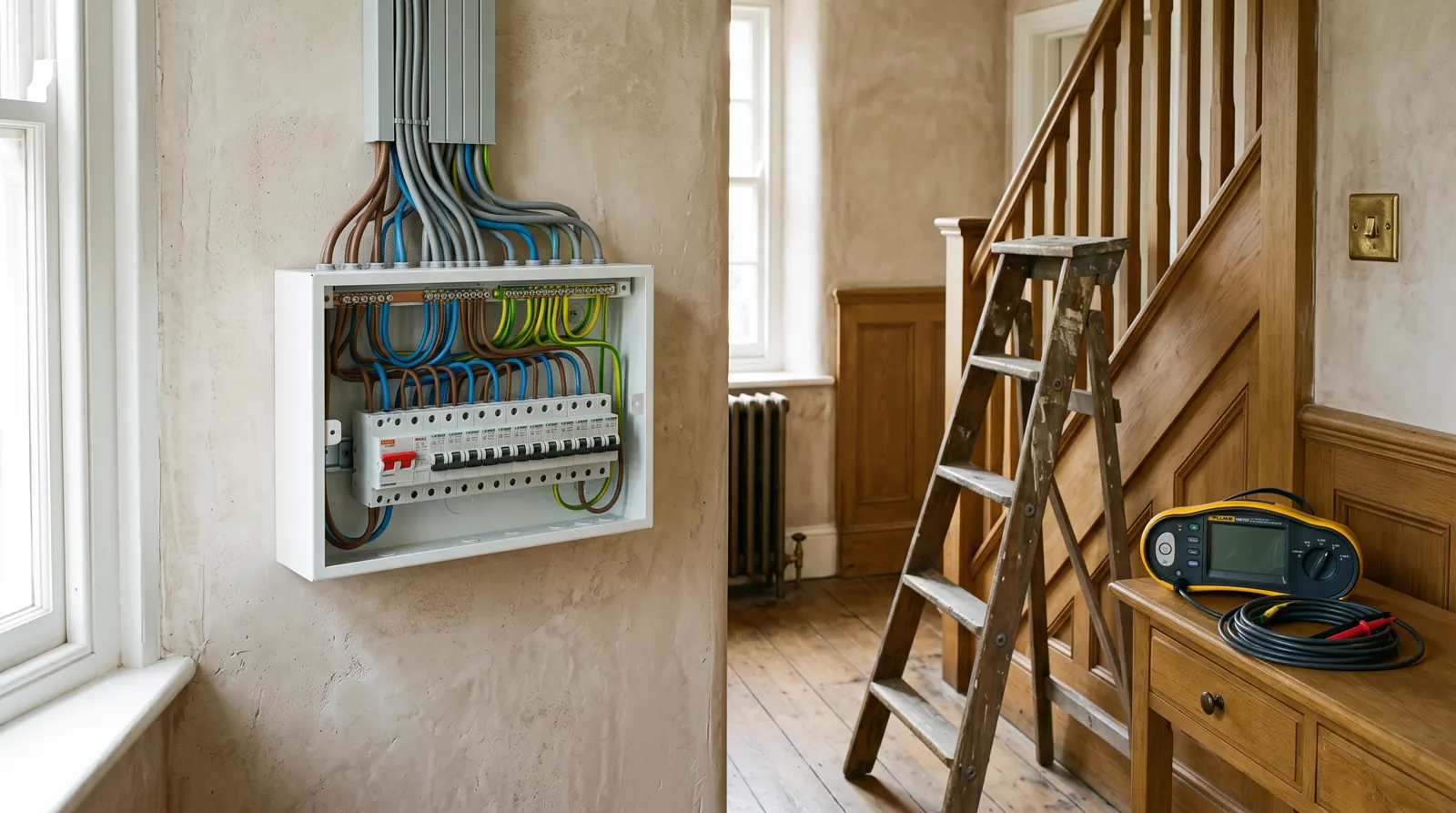
On arrival, we’ll survey the proposed positions, confirm the work with you and safely isolate the relevant circuit. We’ll install the socket or switch, then complete the required inspection and testing before restoring power. Once the work complies with current standards, we’ll provide the appropriate certificate.
Survey and isolation
Before fitting a new socket or switch, we’ll survey the proposed position, identify the circuit at the consumer unit and check the existing wiring is suitable. We’ll consider cable routes, wall construction, nearby pipework and concealed services, plus access and any particular requirements in period or listed properties. A clear risk assessment helps us plan the work safely and minimise disruption to your home.
We’ll then follow proper isolation procedures: identify the correct circuit, isolate its supply, secure it against reconnection and prove dead with suitable test equipment before any work begins. We don’t rely solely on labels or switched-off accessories. We’ll also check earthing, protective devices and circuit capacity, ensuring the proposed addition can be made in accordance with current electrical standards before proceeding further.
Installation
Once the circuit has been safely isolated and checked, we’ll install the new socket or switch using suitable cabling, back boxes and accessories for the location. We’ll route cables within recognised safe zones, protect them where they pass through building fabric and make secure, correctly sized terminations. For solid walls, we’ll chase neatly where agreed; for studwork, we’ll use appropriate boxes and cable protection.
We’ll fit the selected accessory, whether that’s a USB socket, dimmer, smart control or conventional switch, ensuring it suits the connected load and existing wiring arrangement. Screwless faceplates are fitted carefully to sit flush without trapping conductors. Outdoors, garages and damp-prone areas require correctly rated weatherproof enclosures, sealed entries and suitable mounting positions. We’ll minimise disruption, control dust where practical and leave the work area tidy, with covers securely refitted.
Testing
Testing confirms the new socket or switch is safe to use and correctly integrated with the existing circuit. Before energising, we inspect terminations, cable routes, protective devices and enclosure integrity, ensuring suitable connections and correct identification throughout.
We then carry out appropriate dead tests, including continuity and insulation resistance, to check that conductors are sound and there’s no unintended connection between live conductors, neutral or earth. Once safe to energise, we verify polarity, earth fault loop impedance and operation of any RCD protection. For smart switches, USB sockets and outdoor accessories, we also check the intended controls, charging functions and weatherproof seals where applicable.
These checks help identify defects that may not be visible after installation. They complement periodic testing of your wider electrical installation, but focus specifically on the altered circuit and new accessory.
Certificate
After satisfactory testing, we’ll provide the appropriate electrical documentation for the work completed. For minor additions, such as an extra socket or replacement switch, this may be a Minor Electrical Installation Works Certificate. Where the scope requires it, we’ll issue an Electrical Installation Certificate and arrange any applicable Part P notification.
Your certificate records the circuit, protective measures, test results and installer details, giving you a clear record for future alterations, insurance queries or property sales. We’ll explain what has been installed, identify any limitations, and advise on compliance updates that could affect older wiring or the consumer unit. Keep the paperwork with your property documents; it supports warranty transfer where relevant and helps future electricians verify the installation safely. Our workmanship guarantee runs for 12 months from completion.
Options and what we recommend
Whether you need a single extra socket or a wider upgrade, we’ll recommend the safest practical option after checking the existing circuit, cable condition, earthing and consumer unit capacity. We’ll match fittings to how you use each room, avoiding overloaded extensions and unsuitable locations.
| Need | Recommended option | Typical setting |
|---|---|---|
| Bedside charging | USB socket | Bedroom wall |
| Kitchen appliances | Twin switched socket | Worktop splashback zone |
| Garden equipment | Weatherproof socket | External wall |
| Hallway lighting | Recessed sensors | Ceiling approach |
| Mood control | Smart dimmers | Lounge lighting |
For Victorian terraces, we’ll assess older cable types before extending circuits. In post-war homes, suspected aluminium wiring needs particular care. We can position sockets neatly, select appropriate IP-rated outdoor accessories, and make certain controls work reliably with compatible lamps.
Rules and certificates
Once we’ve agreed the right socket or switch arrangement, we’ll confirm the Part P implications before work begins. Part P notification is normally required for the installation of a new circuit, replacement of a consumer unit, or electrical work in a bathroom or other “special location”; however, not every minor change requires notification — the legal duty depends on the exact nature and extent of the work.
As NICEIC-approved, Part P-registered contractors, we can self-certify qualifying work and, where appropriate, notify Building Control on your behalf. We will not imply that notification is always compulsory for every job and will explain when self-certification and notification apply.
We’ll issue the appropriate paperwork for the scope of work: an Electrical Installation Certificate (EIC) for new circuits or consumer unit replacements, and a Minor Electrical Installation Works Certificate for additions or alterations to an existing circuit. An EICR is a periodic inspection report and is not an installation certificate; we’ll explain which document is appropriate before starting.
Older homes around Maidstone
In Maidstone we take a cautious approach to socket and switch work in older properties such as the late-Victorian terraces in Tovil, the Georgian and early-Victorian town-centre townhouses around Week Street and Gabriel’s Hill, and the interwar semi-detached houses in Park Wood and Fant. On terraces in Tovil and in the town-centre terraces built in the 1870s–1890s we commonly encounter VIR (vulcanised India rubber) or other rubber‑insulated cable; before extending circuits in those areas we will assess the existing installation because aged insulation and inadequate earthing found in those 19th‑century terraces can affect safety and compliance. We treat housing stock from the 1920s–1930s in Park Wood and Fant differently, checking for earlier add‑ons or later re‑wires rather than assuming modern wiring throughout.
When working in listed buildings and conservation areas around Maidstone, for example the historic core near Week Street, St Faith’s Street and the West Malling conservation area close to the medieval market square, we will help you select Heritage fittings and plan discreet cable routes that respect each building’s period features. In properties with basements along the River Medway — such as some older houses in Allington and the riverside parts of the town centre — we specifically check wall construction, rising‑damp and moisture risk as well as the condition of switches and sockets. If we identify aluminium conductors or unsuitable joints in the type of 1950s–1970s suburban houses found in Bridgefield or Detling Road areas, we will explain the safest, compliant remedial options for those specific properties before proceeding.
How long it takes and whether you lose power
For a like-for-like socket or switch replacement, we can usually complete the work within an hour and only isolate the relevant circuit while we test, fit and verify it. This keeps disruption limited, although you should expect the affected sockets or lighting points to be unavailable briefly.
Work duration increases where we’re adding a new point, chasing cables into walls, upgrading damaged accessories or tracing older wiring. We’ll assess the circuit, confirm earthing and protective-device suitability, then explain the likely timescale before starting. Power interruptions may extend to the consumer unit during safe isolation and final testing, but we’ll keep them as short as practical. We won’t reconnect supply until polarity, continuity and operation checks meet the required standard. For outdoor or smart accessories, commissioning and weatherproof sealing can add time.