
Maidstone Electrical Inspection Specialists
We carry out clear, evidence-based EICRs and electrical safety checks across ME14, assessing installations to BS 7671, noting defects and explaining their safety significance in plain terms. Our inspections, mindful of heritage wiring, aluminium conductors and listed-building sensitivities, also consider flood-affected properties for corrosion and compromised equipment. The following sections outline our approach, findings and recommended next steps.
Our services
We’re most often called across Maidstone — from town-centre flats around Week Street and Barker Road to semi-detached 1930s houses in Loose and Boughton Monchelsea, Victorian terraces in Fant and riverside properties along the Medway at Aylesford — to carry out EICRs, fault finding, consumer unit work, rewires and landlord safety checks. Every job we carry out in Maidstone and the surrounding villages such as East Farleigh and Barming includes safe isolation where required, appropriate testing, clear findings and a fixed written price before work starts. We’ll issue the correct certificate for Kent properties and submit any applicable Part P notifications for work in Maidstone borough, so you’ve got a compliant record for your local property.
- EICRs and landlord electrical safety reports for flats above shops in the High Street, terraced homes in Fant and older cottages in Yalding
- Fault finding and remedial repairs for 1950s and 1960s semi-detached homes in Loose and Grove Green
- Consumer unit replacements and circuit testing for Victorian and Edwardian properties in Park Wood and Boughton Monchelsea
- Rewires for period (Victorian and Edwardian), listed buildings around Allington and modern 1980s/1990s suburban developments in Senacre and Fant
- Electrical installation certificates, minor works certificates and Part P notification for domestic properties across Maidstone borough, including rural homes in Headcorn and riverside properties by the Medway in Aylesford
The jobs we are called for most
From fault-finding and EICRs to consumer unit upgrades, rewires and additional sockets, we handle the electrical work Maidstone properties most often require. We investigate tripping circuits, loss of power, overheating accessories and damaged cabling, then recommend proportionate remedial work. In post-war estates, aluminium wiring needs careful assessment because unsuitable connections can loosen and overheat. Victorian and period homes may require attention to ageing VIR or rubber-insulated cable, while listed properties need sympathetic planning alongside current safety requirements.
For landlords, we support landlord responsibilities with EICRs, remedial repairs and electrical safety certification for rented homes. We also install EV chargepoints, replace unsafe consumer units, add lighting and sockets, and undertake partial or full rewires where test results show deterioration. Emergency call-outs are available when faults create an immediate risk or disrupt essential supplies.
What is included in every job
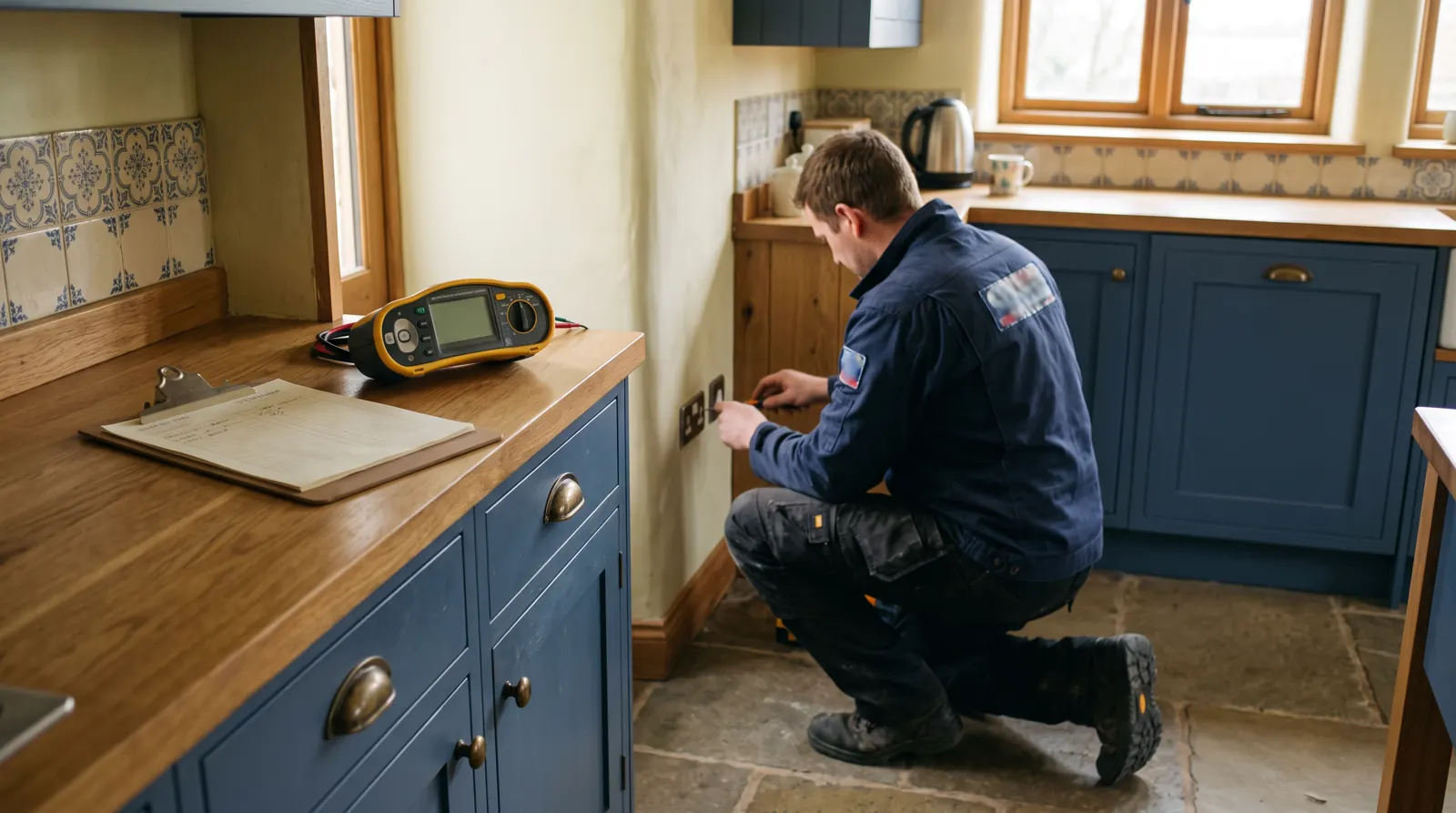
Every job starts with a clear assessment of the installation, the scope of work and any safety risks identified. We inspect accessible wiring, consumer units, protective devices, earthing and bonding, sockets, switches and connected equipment relevant to the task. Where appropriate, we test continuity, insulation resistance, polarity, earth fault loop impedance and RCD operation using calibrated instruments.
We’ll isolate circuits safely where required, apply safe working procedures and explain any operational disruption before work begins. Our checks consider loading, visible deterioration, signs of overheating, equipment lifespan and the suitability of existing protection for current use. We also review safety signage where isolation points, distribution equipment or hazards need clear identification.
You’ll receive a fixed written price before planned work starts, and we keep the work area orderly. Any urgent danger is made safe promptly, with clear advice on remedial priorities.
Certificates and notification
Once testing and any remedial work are complete, we’ll issue the appropriate electrical certification, such as an Electrical Installation Certificate, Minor Electrical Installation Works Certificate or EICR, to record the work, test results and any observations. Your document identifies the installation, circuits tested, protective measures, limitations and any codes requiring action.
Where notifiable domestic work falls within Part P requirements, we’ll complete certificate notification through the appropriate competent-person process. This supports Building Regulations compliance and provides a record for your property file. For landlords, our EICR documentation supports statutory reporting duties, including clear classification of C1, C2, C3 and FI observations. We’ll explain what each code means, prioritise danger and recommend proportionate remedial action. Keep certificates safely: insurers, managing agents, future electricians and local authorities may need evidence of compliant inspection or completed electrical work.
What it costs
Clear, written pricing helps you plan essential electrical work without compromising safety or compliance. We confirm fixed EICR and landlord pricing before testing begins, including VAT, labour, parts and certification.
| Job | Price | What's included |
|---|---|---|
| EICR, up to 3-bed | £150–£250 | Inspection, testing, report and VAT |
| EICR, 4–5 bed | £250–£350 | Inspection, testing, report and VAT |
| Commercial EICR | £30–£50 per circuit | Circuit testing, report and VAT |
| PAT testing | From £1.50 per item (min £80 visit) | Portable appliance testing and report |
| Fault finding | £80 per hour | Fault diagnosis and recorded observations |
| Emergency attendance | £120 per hour (first hour minimum) | Urgent attendance, diagnosis and advice |
Prices exclude plaster decoration, asbestos removal, DNO supply-upgrade charges and scaffold or access equipment.
How long each job takes
Timescales depend on the size, age and condition of the installation, but we’ll assess access, circuit numbers and any safety concerns before confirming the work required. We’ll isolate circuits where testing demands it, minimise disruption and document limitations that could affect compliance.
| Service | Typical duration |
|---|---|
| Domestic EICR | 2–4 hours |
| Landlord remedial checks | 1–3 hours |
| PAT testing | Minutes per appliance |
| Fixed-wire testing | Half day or longer |
This job breakdown is indicative, not a substitute for inspection. An EICR may take longer where circuits are inaccessible, labels are absent, or faults require investigation. We don’t rush dead tests, live verification or protective-device checks: accurate results depend on safe isolation and full circuit coverage. If remedial work is needed, we’ll explain the findings, provide a written fixed price, and arrange certification after compliant completion.
Property types we work on around Maidstone
In Maidstone we work across distinct neighbourhoods with different housing types and ages. In the town centre and neighbouring Tovil we inspect Victorian and late‑Victorian terraces built c.1850–1900, so we focus there on legacy VIR and rubber‑insulated cables, original earthing arrangements and the extent of any Victorian rewiring. In Shepway, Park Wood and Senacre, where many homes were constructed in the 1950s–1970s, we pay particular attention to aluminium wiring, potentially loose terminations and overheating risks typical of that post‑war stock. Grove Green and Vinters Park contain a higher proportion of homes built from the 1980s onwards; for those newer houses we assess modern consumer units, accessory condition and any issues from later alterations. Across Maidstone borough we also attend to listed buildings and conversions in parts of Staplehurst and the conservation areas around the town centre—these older or adapted properties require sensitive access arrangements while still ensuring protective devices, bonding and circuit condition are properly examined. We have experience with riverfront properties along the Medway and near Allington and Whatman Park, where historic water ingress can affect accessories, consumer units and concealed wiring. Whether you occupy, let or manage a property in these Maidstone neighbourhoods, we tailor our inspection and testing to the local area’s typical construction and age so we can clearly identify safety defects and compliance concerns.
Certificates you will receive
Once testing is complete, we’ll issue the certificate that corresponds to the work carried out: an Electrical Installation Certificate (EIC) for a new circuit or consumer unit, a Minor Electrical Installation Works Certificate for an addition or alteration to an existing circuit, and an Electrical Installation Condition Report (EICR) for a condition inspection.
Each document records test results, observations, circuit details and any limitations, providing a compliance record. Where work is notifiable under Part P of the Building Regulations — typically including new circuits, consumer‑unit replacements and certain bathroom work — we self‑certify through NICEIC where authorised to do so and submit the required Building Control notification. (If we are not authorised for a particular job, you may need a separate Building Control application or the work must be notified by the installer.) You’ll receive the relevant Building Regulations compliance documentation; you are not required to arrange a separate inspection if notification is handled by us or another authorised certifier.
We use electronic signatures for secure, traceable certification and can provide renewal reminders for future EICRs. Keep certificates safely: while they do not in themselves transfer legal responsibility, they are an important record for managing electrical safety, meeting landlord obligations where applicable, supporting insurance enquiries and assisting with future alterations.
Areas we cover from Maidstone
From our base at Eclipse Park in Maidstone (ME14) we provide electrical testing, inspection and certification across the town, including Bearsted village, Penenden Heath, Tovil, Barming and Loose. We visit terraced and semi‑detached homes in Loose and Bearsted—many dating from the late Victorian and Edwardian periods—post‑war council estates around Tovil and parts of Barming built in the 1950s–1970s, plus more recent 1990s–2000s housing developments on the outskirts of Maidstone. We also attend rented flats above shops on Earl Street, owner‑occupied houses in Barming Lane, offices in the Williamson Way/Eclipse Park area, and managed premises such as care homes and small retail units in the town centre, assessing installations against BS 7671 and issuing the appropriate EICR or minor works certificates where required.
In older properties around Loose and Bearsted we commonly encounter older fabric‑insulated and sometimes re‑wired circuits with obsolete fuseboxes; in the post‑war estates near Tovil and Barming we frequently find ring final circuits with ageing PVC insulation and consumer units from the 1960s–1980s that may lack modern RCD protection; on the newer developments to the south and west of Maidstone we see modern twin and earth cabling and more recent consumer units but still check for correct earthing arrangements and protective device sizing. We will identify safety defects such as unprotected circuits, deterioration of cables, overloading of socket circuits in town‑centre flats, and inadequate protective measures in older houses, then explain the remedial priorities clearly with recommendations tailored to the specific Maidstone neighbourhood.
We also support electrical safety planning for community events in Maidstone, for example testing temporary supplies and distribution equipment for fetes on Penenden Heath, checking generator connections and RCD protection at village events in Bearsted, and inspecting temporary lighting and sockets for markets in the town centre. Our outreach extends to rural properties and small holdings on the outskirts of Maidstone—along the A20 corridor and the villages surrounding the borough—so landlords, businesses and homeowners in those named areas can arrange compliant inspections without needing to travel into a trade counter in central Maidstone.