What an EICR is and who needs one
An EICR is a formal inspection of a property’s fixed electrical installation, typically costing £150–£350 and taking 1–3 hours to complete.
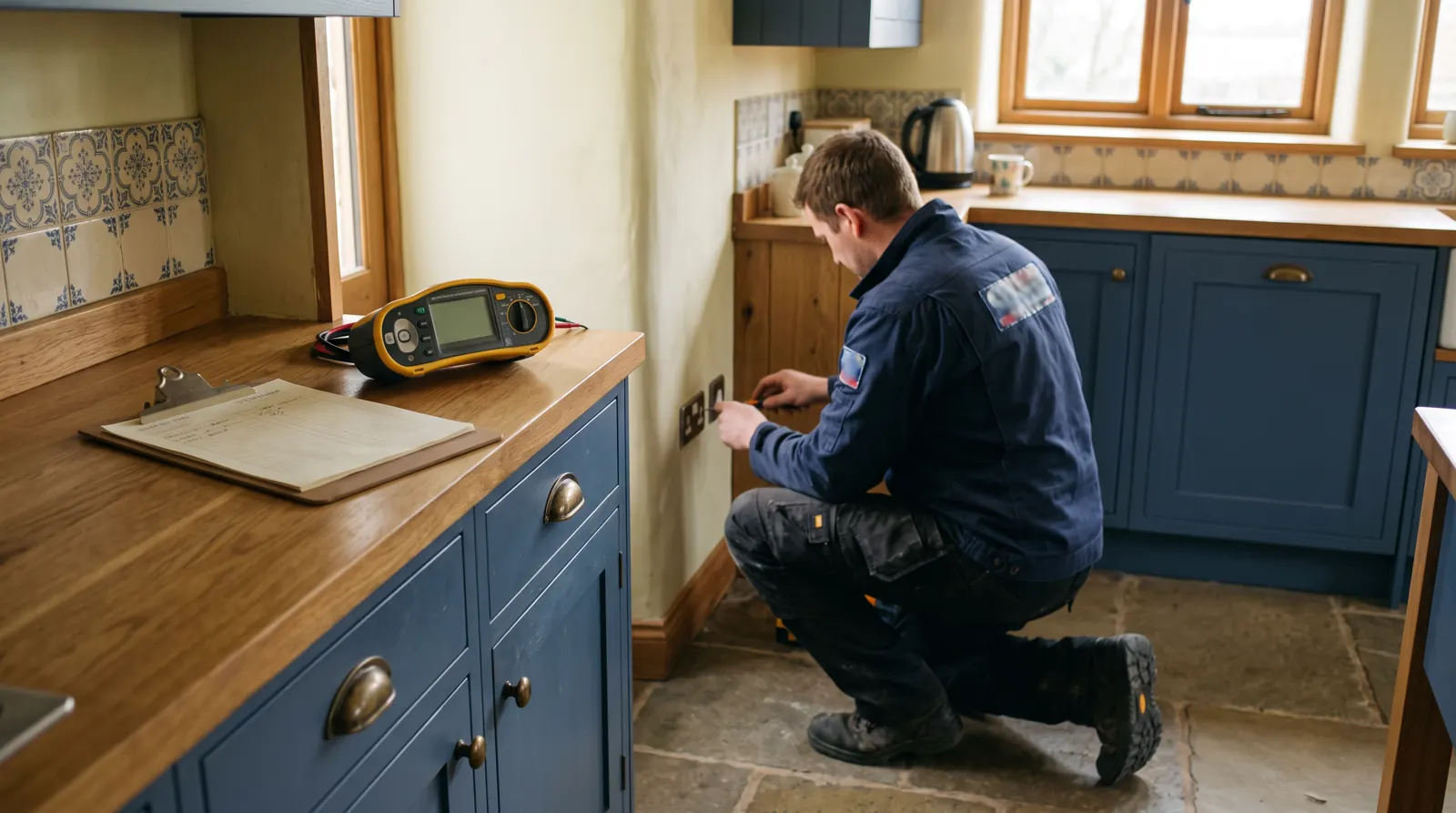
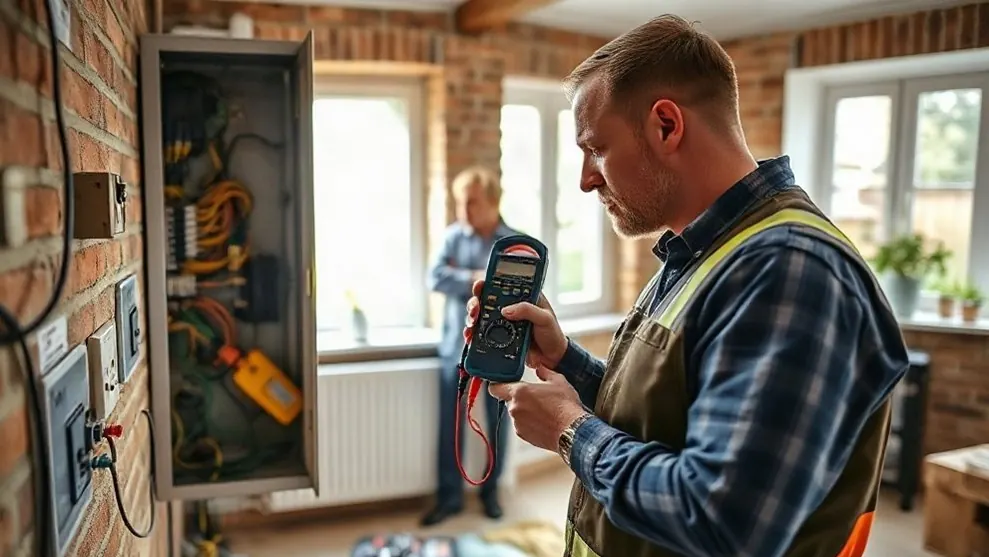
We inspect fixed wiring, the consumer unit, circuits, sockets and protective devices to identify defects, deterioration and safety risks. We test and assess the installation against current safety standards and record observations that could affect electrical compliance.
If you’re buying a Maidstone home, an EICR helps us identify concealed issues before you commit, particularly in Victorian properties with older cable types or post‑war homes where aluminium wiring may be present. It isn’t required to sell a house, but it provides evidence of the installation’s condition.
Landlords must obtain a satisfactory EICR at least every five years, while homeowners should consider inspection frequency based on the age of the installation, any alterations, damage and occupancy. We also recommend an EICR after flooding, major building work or if you suspect electrical faults.
What an EICR costs in Maidstone
Typical EICR costs in Maidstone depend on property size; prices below include VAT, labour, testing and the certificate. We test protective devices, earthing, bonding, continuity, insulation and polarity and record observed defects.
| Job | Price | What's included |
|---|---|---|
| Up to three bedrooms EICR | £150–£250 | VAT, labour, testing and the certificate; checks of protective devices, earthing, bonding, circuit continuity, insulation resistance and polarity; defect recording |
| Four or five bedrooms EICR | £250–£350 | VAT, labour, testing and the certificate; checks of protective devices, earthing, bonding, circuit continuity, insulation resistance and polarity; defect recording |
Not included: remedial repairs, making good plaster or decoration, asbestos removal, DNO supply-upgrade charges, scaffold or specialist access equipment.
Do landlords in Maidstone need an EICR?
Private landlords in Maidstone should be aware that there is a legal requirement for most privately rented properties in England to have an Electrical Installation Condition Report (EICR) carried out by a qualified person at least every five years and before each new tenancy in certain circumstances; however, some exceptions apply (for example, houses in multiple occupation and specific contractual arrangements), so check current government guidance or ask Maidstone Borough Council for property‑specific advice. The inspection should assess the fixed electrical installation (consumer unit, circuits, protective devices, earthing and bonding, and socket circuits) for defects that could cause shock or fire, with observations recorded using the standard codes; any C1, C2 or FI findings will ordinarily require remedial work within the timescales specified in the report (commonly 28 days or sooner if stated), followed by written confirmation of completion. Landlords must provide the EICR to new tenants before they move in and to existing tenants within 28 days of the inspection, and supply it to the local housing authority within seven days if requested; failure to comply can lead to enforcement action and financial penalties under the Housing Act and related regulations, with maximum fines set by the authority in accordance with the legislation (penalty amounts can be substantial).
Do you need an EICR to sell your house?
No — there is no legal requirement in England for an Electrical Installation Condition Report (EICR) solely to sell a house in Maidstone. However, an EICR is often recommended where the installation’s age, condition or paperwork is uncertain because an inspection can identify defects such as damaged insulation, inadequate earthing, missing RCD protection, overloaded circuits and issues within the consumer unit.
A satisfactory report can give buyers clearer evidence of electrical safety and may reduce negotiation over unknown remedial costs; it can also help support a valuation where an older installation might otherwise raise concerns. An EICR is not normally a condition of mortgage approval, although lenders or surveyors may flag visible electrical defects and a buyer can request testing before exchange.
For Victorian homes, post-war properties or flood-affected installations, a detailed inspection is particularly advisable.
Do businesses need one?
Businesses have a duty under the Electricity at Work Regulations 1989 to ensure electrical systems are maintained so they do not give rise to danger, but the Regulations do not prescribe a fixed statutory interval for commercial EICRs (fixed‑wire testing). The commonly quoted intervals — five years for offices, three years for industrial premises and annual for certain high‑risk locations — come from IET Guidance Note 3 and are guidance rather than legal deadlines; the appropriate frequency depends on the nature of the premises, how equipment is used, the environment, any alterations and findings from previous reports. An EICR for your Maidstone business provides documented evidence that you are managing electrical risk and supporting fire safety, and insurers, commercial landlords and licensing bodies often require a current EICR as a condition of cover or occupation, so letting one lapse can affect compliance evidence or insurance terms. Plan testing around operational needs to minimise disruption and protect business continuity, and keep reports, records of remedial work and certificates available for inspection.
What we check
We assess the installation’s visible condition and carry out appropriate testing to identify safety concerns before you commit to a purchase. - Consumer unit, protective devices, earthing and bonding - Cable condition, insulation resistance, sockets, switches and accessories - Overheating, damage and signs of unsafe DIY alterations
We’ll explain any observations clearly, including issues that may need remedial work or further investigation.
The consumer unit and protective devices
At the consumer unit, we check that protective devices are correctly selected, labelled and operating as intended. We inspect the enclosure’s condition, access, blanking plates, circuit schedule and signs of overheating, corrosion, loose connections or unsuitable alterations. We identify older fuse boxes and assess whether their fuses, switches and protective arrangements remain appropriate for the installation’s present use.
We test RCDs and RCBOs where safe to do so, confirming disconnection performance and checking that circuit allocation supports safe fault protection. We also examine whether overcurrent devices match conductor sizes and whether unused ways are safely secured. Where fitted, we check surge protection devices for correct installation and visible status indication. Any missing labels, damaged components or evidence of overheating is recorded clearly, helping you understand urgency and likely remedial work before purchase.
Earthing and bonding
Earthing and bonding are critical to shock protection, so we inspect the main earthing arrangement, earthing conductor and main protective bonding to incoming metal services where present. We identify the supply earthing type, confirm that connections are accessible, secure and correctly sized, and check that clamps are labelled and fitted on the consumer’s side of any insulating section or meter.
Where safe and appropriate, we carry out tests to establish earthing resistance and verify that protective measures can operate within required disconnection times. We also assess bonding integrity at water, gas and other extraneous-conductive-parts, noting absent, loose, corroded or undersized conductors. In older Maidstone properties, alterations to plumbing can leave services unbonded, so we’ll flag defects that could increase touch-voltage risk.
Cable condition and insulation resistance
Cable condition gives a clear indication of an installation’s age, safety and likely remaining service life. We inspect accessible wiring for cracking, brittleness, overheating, mechanical damage, poor support and unsuitable alterations. In Maidstone’s Victorian terraces, we’re alert to old rubber or VIR-insulated cable; on post-war estates, we also consider the risks associated with aluminium conductors.
We carry out insulation testing, where safe and appropriate, to measure resistance between conductors and earth. Low readings can indicate deteriorated insulation, moisture ingress, contamination, damaged cable or concealed connection faults. We isolate sensitive equipment before testing and explain any limitations where circuits cannot be fully tested. Cable ageing doesn’t automatically mean immediate replacement, but degraded insulation can increase electric-shock and fire risk. Our findings help you understand whether repairs, further investigation or partial rewiring should be budgeted before purchase.
Sockets, switches and accessories
Alongside cable testing, we inspect sockets, switches, ceiling accessories and visible connection points for damage, overheating, loose fixings, cracked faceplates, poor-quality alterations and signs of overloading. We check that accessories are securely mounted, correctly positioned and suitable for their location, including kitchens, bathrooms and utility areas.
We assess whether socket circuits provide adequate coverage for modern use, reducing reliance on extension leads and adaptors. We also note inconsistent accessory types, obsolete fittings and installations that may compromise socket longevity or indicate incomplete alterations. Switch operation, plate alignment and fixing condition are recorded, while switch aesthetics are considered separately from electrical suitability. For a buyer, these observations help distinguish straightforward accessory renewal from work requiring further investigation. Where accessible, we identify whether visible connections appear properly enclosed and protected from accidental contact.
Signs of overheating, damage or DIY work
We check for heat discolouration, scorching, melted insulation, brittle cable coverings, damaged enclosures and burning smells that can indicate overloaded circuits, loose connections or previous faults. These defects can create electrical hotspots behind accessories, within consumer units or at cable joints, so we inspect accessible wiring routes and terminations carefully.
We also look for unsafe DIY alterations, including unsupported cables, incorrect connections, mixed cable types, missing covers, unsuitable junction boxes and circuits extended without appropriate protection. In Maidstone’s older homes, rubber, VIR or aluminium wiring may need closer assessment where age-related deterioration is visible. We’ll note impact damage, moisture ingress and signs that a repair has concealed a defect. Where safe testing is possible, we use results alongside visual findings to identify concerns requiring repair, further investigation or an EICR before you commit.
What the codes mean
We’ll explain each EICR observation code so you can judge the safety implications before committing to a purchase.
| Code | Meaning | Required response |
|---|---|---|
| C1 | Danger present; immediate risk of injury. | Make safe without delay. |
| C2 | Potentially dangerous condition. | Arrange urgent remedial work. |
| C3 | Improvement recommended; not immediately unsafe. | Consider upgrading. |
| FI | Further investigation needed to determine safety. | Investigate promptly. |
A C1, C2 or FI outcome means the installation is unsatisfactory, while a C3 alone doesn’t make it unsatisfactory.
C1, C2, C3 and FI explained
An EICR records observations using standard classification codes, helping us distinguish between an immediate danger and an item that should be improved. C1 means danger is present: we’ll advise immediate remedial action, such as making exposed live parts safe. C2 identifies a potentially dangerous condition requiring urgent correction, for example inadequate earthing or a damaged accessory.
C3 is an improvement recommendation. It doesn’t make the installation unsatisfactory alone, but you should consider it when budgeting, particularly with historic wiring or planned aluminium upgrades. FI means further investigation is required because testing or inspection cannot confirm safety; concealed defects, inaccessible circuits or inconsistent results may need additional work.
A C1, C2 or FI normally produces an unsatisfactory EICR. We’ll explain each observation, its location, risk and recommended remedial work before you commit to purchase.
How long it takes and what we need from you
Most homebuyer electrical surveys in Maidstone take around two to four hours, depending on the property’s size, age and access to the consumer unit, circuits and fixed equipment. Larger homes, extensions, outbuildings and older installations may require longer, particularly where wiring routes or protective devices need closer inspection.
For straightforward appointment logistics, please arrange access with the seller, agent or occupier and make certain electricity is connected. Our access requirements include clear entry to the consumer unit, meters, sockets, switches, loft spaces, garages and any fixed equipment we need to inspect. We may need to isolate circuits briefly for safe testing, so computers, alarms and sensitive equipment should be identified beforehand. Please provide any previous electrical certificates, alteration records and details of known faults. We’ll work methodically, minimise disruption and explain any access limitations recorded during the survey.
What happens if it fails
A failed electrical survey won’t necessarily stop a sale but can delay completion by up to 28 days and may incur remedial costs typically between £250–£2,000 depending on severity.
If a homebuyer electrical survey identifies unsatisfactory or potentially dangerous conditions, we’ll explain the observations clearly, record their severity and provide a written quotation for any remedial work. We’ll distinguish urgent hazards, such as exposed live parts, overheating connections or missing protective measures, from defects requiring planned attention.
You can use the findings when renegotiating the purchase price, asking the seller to arrange repairs, or budgeting after completion. Our remediation options may include replacing damaged cable, correcting earthing and bonding, fitting appropriate RCD protection, repairing accessories or upgrading an unsafe consumer unit.
We’ll advise where circuits should be isolated until repaired and what certification is needed once work is complete. Although a failed survey doesn’t automatically prevent a sale, unresolved defects can have insurance implications, especially where known risks contribute to damage, fire or injury.
Recent EICRs near Bearsted
Recent EICRs we’ve carried out in Bearsted village and the adjoining Maidstone neighbourhoods of Otham, Thurnham and Boughton Monchelsea have identified issues typical to the local housing mix. In Bearsted itself, where many properties are 1930s and 1950s semi‑detached and terraced houses, we frequently find incomplete RCD protection on circuits added during later kitchen or bathroom refurbishments. In the Otham and Thurnham hamlets, where there is a higher proportion of older stone cottages and 19th‑century farm conversions, poor earthing or absent bonding on metalwork is a recurring concern. In Boughton Monchelsea and on the newer estate infill around Park Wood, where 1980s and 1990s detached and chalet bungalows predominate, we often see deteriorated accessories and evidence of loft conversions or garden power supplies that have been added without updated documentation.
During inspections in these specific locations we test protective devices on the consumer units commonly used in Bearsted and Park Wood, verify circuit continuity on the typical ring and radial circuits found in 1930s–1990s houses, measure insulation resistance and confirm that disconnection times meet current safety requirements for the local installations. We also inspect the consumer unit, meter tails, main bonding conductors and accessible wiring routes in the types of properties above—for example, the mains bonding in older cottages in Thurnham and the meter tails in 1970s semis in Boughton Monchelsea—for signs of damage, overheating or unsuitable connections.
Local trends around Bearsted vary: in the village and nearby 1930s suburbs we see legacy wiring altered over decades, while in the estates off Sutton Road and around Otham Road newer homes and extensions (1980s–2000s) often have additional circuits serving loft conversions, conservatories and garden offices. If you’re buying a house in Bearsted village, a 1930s semi in Otham or a converted farm building in Thurnham, an EICR provides evidence of the installation’s condition at the inspection date for that specific property and neighbourhood. It can identify defects requiring correction before occupation, allowing you to assess electrical risk for that particular Bearsted property and plan remedial work appropriate to its age and type.