Fixed-Price Electrical Work Throughout ME14
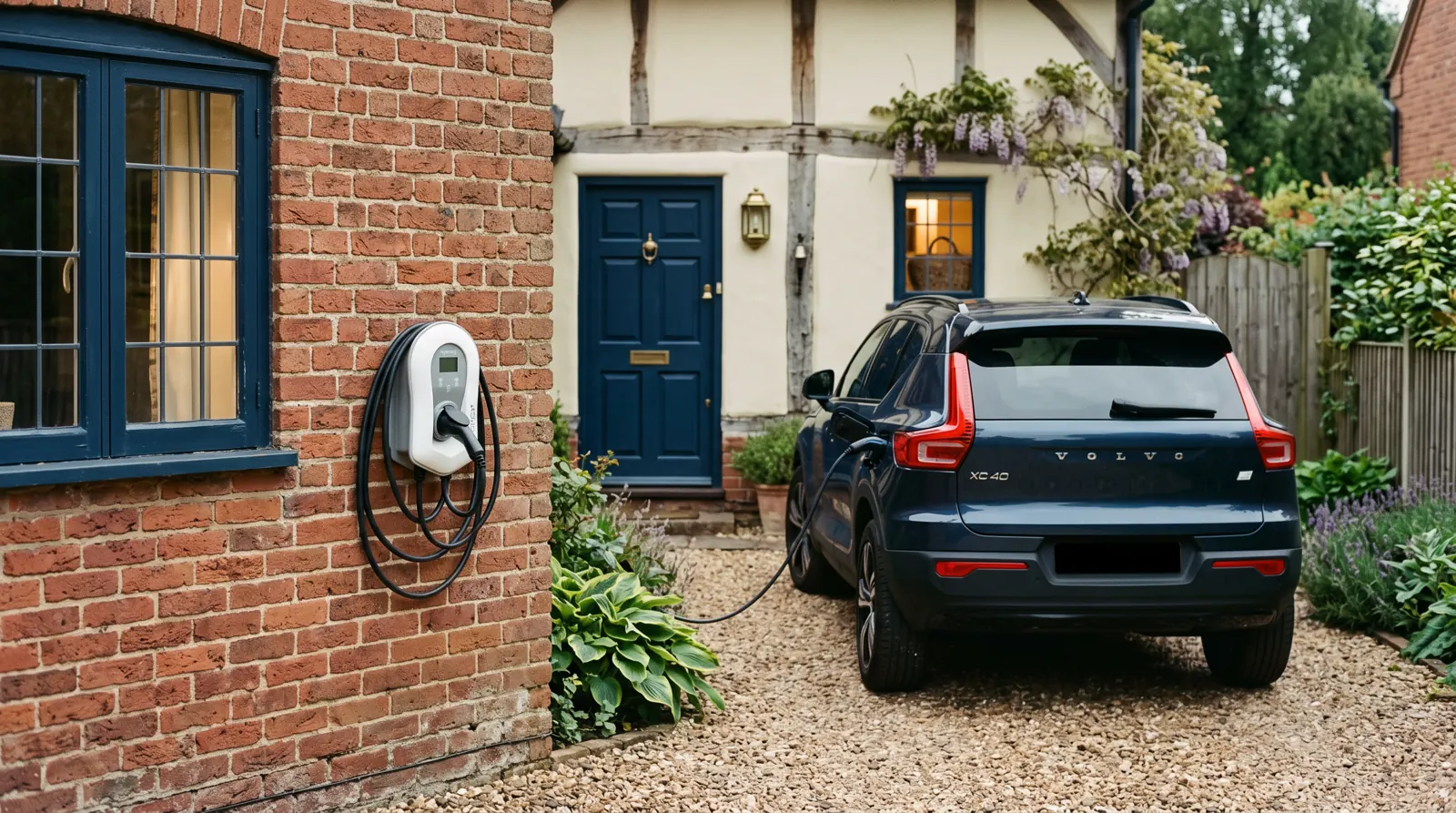
We provide fixed-price EV chargepoint installations across ME14, with the full scope agreed in writing before work begins. Before quoting we assess supply, consumer unit capacity, earthing, cable routing and charging load to identify any protective devices, load management or supply upgrades that may be required. We follow Part P and NICEIC standards, explain safety-critical findings, and supply certification and documentation.
Our services
We install EV chargepoints across Maidstone and surrounding neighbourhoods such as Barming, Allington, Loose, Bearsted and Coxheath. In older semi-detached and terraced houses in Maidstone town centre (many built in the late 19th and early 20th centuries) and in post-war detached and semi properties common in Allington and Bearsted (1950s–1970s), we assess your supply capacity, earthing arrangement and cable route at the specific address before quoting. In newer developments in the Oaks and Hermitage Lane areas (2000s–2010s estate homes) we check distribution board space and any communal estate restrictions before providing a price.
For homes in Loose and Barming with limited off-street parking we discuss socket placement and cable runs along garden paths or across narrow drives; for properties in Coxheath and the detached houses off Fant Lane we consider longer cable lengths and driveway-mounted chargepoints. You’ll receive a fixed written price for the Maidstone property named in our survey, a safe installation compliant with local conditions, and a clear handover pack referencing the installation address and any estate management contact details. Where required for properties in Maidstone borough we provide the relevant electrical certificate for that address and complete the Part P notification specific to the local authority area.
Our core services across Maidstone neighbourhoods: 1. Home EV chargepoint installation at the named Maidstone address (terraced, semi-detached or detached, including late-Victorian town houses in the centre and suburban 1950s–2000s stock in surrounding villages). 2. Consumer unit upgrades and load evaluation tailored to the property's era and wiring type (e.g. pre-1960s installations in central Maidstone vs. 1970s consumer units in Bearsted). 3. Cable routing, isolation and testing planned for the exact driveway, garden or communal parking layout at the surveyed Maidstone location. 4. Electrical certification and notification issued for the specific Maidstone property and submitted to the appropriate local authority.
The jobs we are called for most
Most EV chargepoint enquiries in Maidstone involve checking whether the existing consumer unit, earthing arrangement and incoming supply can safely support a dedicated charging circuit. We’re commonly asked to fit home chargepoints, upgrade overloaded consumer units and assess supplies where electric showers, heat pumps or extensions already demand capacity.
Older properties need particular care. Victorian homes in Tovil may retain ageing cable, while post-war estates can contain aluminium wiring that requires sound connections and suitable assessment before charging equipment is added. We also advise owners of period homes on listed rewiring considerations, helping protect fabric while planning compliant routes.
Where the supply is limited, we’ll explain practical options, such as load management or a distribution network operator supply upgrade. This prevents avoidable expenditure and guarantees the proposed chargepoint is appropriate for your vehicle, tariff and available electrical capacity.
What is included in every job
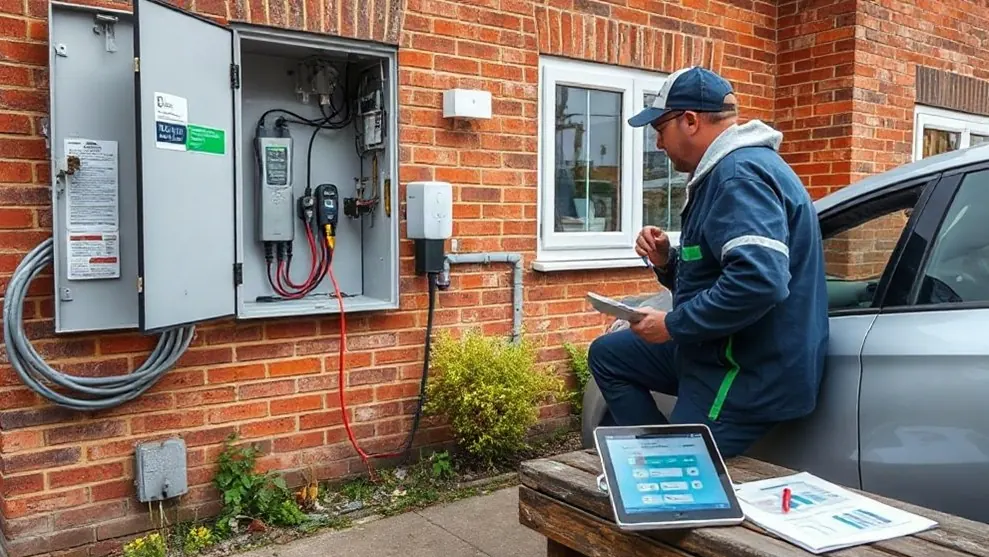
Every EV chargepoint installation starts with a site assessment, fixed written quotation and checks of the consumer unit, earthing, cable route and available supply capacity. We confirm where the chargepoint will sit, measure the run from the consumer unit and identify practical Cable routing that limits disruption, drilling and visible trunking where possible.
We then install a dedicated circuit with correctly selected protective devices, suitable cable sizing and secure external fixings. Where supply limitations or older wiring affect the design, we’ll explain the options and associated costs before work begins. Our fixed price is agreed in writing, so your bill won’t exceed the quote.
On‑site testing forms part of every installation. We verify protective measures, connections, charging operation and safe isolation, ensuring the chargepoint is ready for reliable everyday use.
Certificates and notification
Once the chargepoint has passed testing, we’ll provide the relevant electrical certification and notify the work where Part P requirements apply. This confirms that the installation has been inspected, tested and connected safely, including protective devices, earthing and cable performance.
Our Notification process is handled through our NICEIC registration, avoiding unnecessary administration for you. Where notification is needed, the local authority receives the details and you retain the compliance records for your property file, insurance or future sale.
Certificate timelines depend on the installation and notification route, but we’ll explain what you’ll receive before work starts. Certification is included within our written fixed price, so there are no separate surprise charges. Keep certificates with your chargepoint instructions and any grant paperwork; they provide useful evidence that the work was completed by a competent, registered electrician.
What it costs
An EV chargepoint installation in Maidstone starts from £1,000 fitted (VAT, parts, labour, testing and certification included); eligible customers may pay about £500 after an OZEV grant. We’ll give a fixed written price after checking your EV infrastructure and supply safety.
| Job | Price | What's included |
|---|---|---|
| EV chargepoint | From £1,000 | Parts, fitting, testing, certificate, VAT |
| Fault finding | £80/hour | Diagnosis; most faults traced in 1–2 hours |
| Consumer unit replacement | £500–£700 | Parts, labour, testing, certificate, VAT |
Not included: plaster repairs, decoration, asbestos removal, DNO supply-upgrade charges, scaffold or access equipment; these will be identified before proceeding where visible.
How long each job takes
Most straightforward home chargepoint installations take around half a day, while a longer cable route, consumer unit alterations or supply limitations can extend the work to a full day or more. We’ll confirm likely installation duration after inspecting earthing, protective devices, cable containment and the proposed charging load, so you can plan without unexpected labour costs.
| Work scope | Typical time |
|---|---|
| Standard wall-mounted chargepoint | Half day |
| Extended cable route | Full day |
| Consumer unit upgrade | Full day or longer |
We isolate circuits safely, install and label the dedicated protection, then complete testing before energising. Our post installation checks verify polarity, earth-fault protection, insulation resistance and chargepoint operation. If the supply requires distributor input, we’ll explain the delay before work begins.
Property types we work on around Maidstone
From the Victorian terraces in Tovil and central Maidstone (mostly mid-to-late 19th century brick houses) to the post‑war semi-detached homes in Shepway, Park Wood and Senacre (typically 1940s–1960s builds), we tailor EV chargepoint installations to the wiring, earthing and consumer‑unit capacity found in those areas. In Tovil and central Maidstone many older houses still have VIR or rubber‑insulated cable, so on those mid‑Victorian terraces we assess the condition of circuits before adding a sustained charging load. In parts of Shepway, Park Wood and Senacre it is not uncommon to encounter post‑war wiring practices, and where we find aluminium conductors in those neighbourhoods we carry out careful connection checks and recommend remedial work specific to those streets.
In Grove Green and Vinters Park — where much of the housing stock dates from the 1980s and 1990s — the typical cable routes from house to driveway, the distance to an on‑plot parking space and the number of spare ways in the consumer unit can affect installation cost, so we survey those factors on site. For Listed properties within Maidstone town centre and the conservation areas around Allington and Barming, we plan discreet cable routes that minimise disturbance to historic fabric while ensuring safe isolation, suitable protection and compliant earthing specific to those buildings. If a supply upgrade or consumer‑unit replacement is required for a property in any of these Maidstone neighbourhoods, we explain the options and provide a fixed written price before we start work.
Certificates you will receive
Once we’ve completed your EV chargepoint installation, we’ll provide the appropriate electrical certificate for the work: typically an Electrical Installation Certificate (EIC) where a new dedicated circuit has been installed, or a Minor Electrical Installation Works Certificate where the chargepoint is added to a suitable existing circuit.
If required, we’ll submit any necessary Part P notification through our competent-person scheme so you do not need to arrange a Building Control inspection yourself; in some cases a homeowner can notify Building Control directly instead. Your documentation will record test results, circuit details, protective-device information and confirmation that the installation was safe when tested — keep it with your property records to support future alterations, fault diagnosis, insurance enquiries and any manufacturer warranty registration. As part of our post‑installation survey we’ll explain the paperwork, demonstrate safe operation and point out anything that may need attention. An Electrical Installation Condition Report (EICR) is not normally issued for this type of installation; an EICR is a periodic condition report covering the wider fixed wiring, not a certificate of new work.
Areas we cover from Maidstone
Based at Eclipse Park in Maidstone ME14, we install EV chargepoints across Maidstone town centre, Bearsted village, Penenden Heath, Tovil, Barming and Loose. We travel to your property and, for each specific area, assess the parking position, cable route, earthing arrangement and capacity at the consumer unit before confirming a fixed written price.
In central Maidstone — where many terraced houses, mid‑Victorian semis and some 1960s flats line Week Street and Earl Street — we pay particular attention to ageing VIR or rubber‑insulated cables in older Victorian and early‑20th‑century properties before connecting new charging equipment. Around Tovil, where there are late‑19th to early‑20th‑century mill cottages and interwar suburban houses on Tovil Hill and Church Lane, we check for original rubber insulation and constrained external routes. In post‑war estates such as parts of Barming and sections of Penenden Heath with 1950s–1970s council or private semi‑detached houses, aluminium wiring and shallow consumer units may need assessment or upgrading. In Bearsted village — with its listed village centre and many 18th–19th‑century timber‑framed and brick cottages on The Green and Chapel Street — we plan discreet cable routing to protect period fabric and minimise visible trunking. For homes bordering the Loose floodplain, including properties along Loose Road and around Loose Valley, we consider flood exposure, set equipment heights above typical flood levels and specify suitable external containment and IP ratings. Where local supply limitations on streets such as Cannon Lane or parts of Fant Lane in Maidstone affect charging options, we’ll explain practical, area‑specific solutions (for example off‑peak timers, load management or distribution board upgrades) before work starts, without unexpected costs.