What an EV charger costs to install in Maidstone
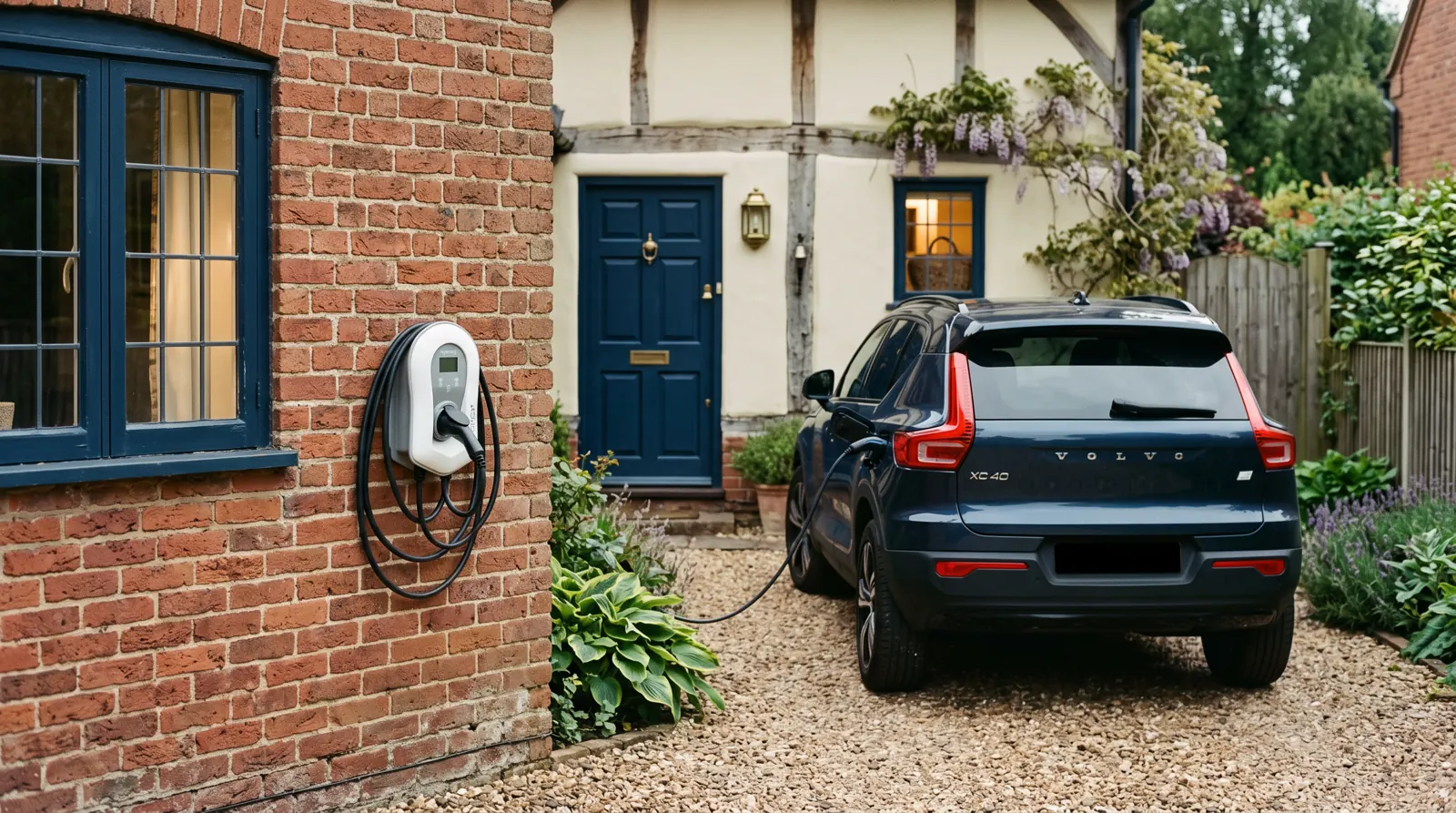
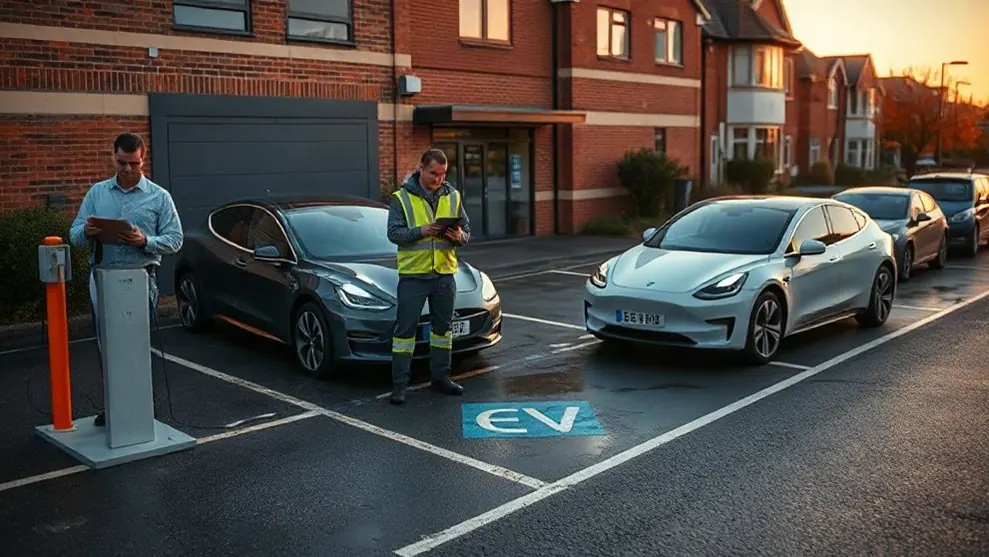
An EV chargepoint installation in Maidstone typically costs from £1,000 fitted (including VAT, parts, labour, testing and certification). We’ll assess your parking position, cable route and consumer unit capacity during a free survey and give you a fixed written price so you know the cost before work begins.
Installation factor — cost position - Standard chargepoint: From £1,000 fitted - Labour: Included - Testing and certificate: Included - VAT and parts: Included
A straightforward installation usually keeps EV running costs predictable by enabling convenient home charging. Longer cable runs, consumer unit alterations or supply upgrades may add cost; we’ll identify these during the survey. DNO charges, asbestos removal, scaffolding, plaster repairs and decoration aren’t included. We can also position and specify equipment thoughtfully, balancing practical access, weather exposure and charger aesthetics, without compromising compliance or safe operation.
Grants available right now
The OZEV EV chargepoint grant is currently £500 per socket for eligible installations completed from 1 April 2026 and available until 31 March 2027, which OZEV has described as the scheme’s final year. Exact eligibility criteria and the scheme end date are set by the government and can change.
If we are OZEV‑authorised we can check eligibility before work begins and, with your permission, submit the grant claim on your behalf; being OZEV‑authorised is a requirement to process claims for this scheme. The grant is aimed at flat owners and tenants with private off‑street parking and at landlords installing chargepoints at qualifying properties; most owner‑occupied houses do not qualify.
There is no separate mandatory local council grant for this OZEV scheme, but some local authorities may offer additional support; funding rules and deadlines can change, so check the government’s guidance each April. For a 7 kW installation we will handle any required UK Power Networks notification and advise if a supply check appears necessary — network operators decide whether a supply check is required.
Which charger suits your home
The best chargepoint depends on your car, parking arrangement and electrical supply, rather than simply choosing the highest kW rating. We’ll help you select a reliable unit that matches how you drive and where you park.
| Consideration | Best fit |
|---|---|
| Cable convenience | Tethered for everyday simplicity |
| Flexible compatibility | Untethered for changing vehicles |
| One vehicle | Single socket |
| Two vehicles | Dual socket where capacity allows |
Tethered vs Untethered is mainly about convenience: a tethered cable stays ready on the wall, while an untethered model lets you use your vehicle’s lead. Single vs Dual depends on whether you need to charge two cars, not merely future-proofing. We’ll also consider cable reach, off-street parking and your consumer unit capacity, ensuring your chosen chargepoint is practical, safe and grant-appropriate.
What is involved on the day
Once you’ve chosen a suitable chargepoint, we’ll agree the installation position, cable route and any grant-related details before work begins. We’ll also confirm parking logistics, access constraints and where you’d like us to work, so the visit runs smoothly.
On the day, our NICEIC-approved electricians protect nearby surfaces, install the chargepoint and route cabling neatly using the agreed route. We’ll keep disruption to a minimum and explain anything that needs your attention before proceeding. For flats or rental properties, we’ll make certain the required permissions and grant paperwork are available.
Once fitted, we’ll commission the chargepoint, test its operation and show you how to use its controls or app. We’ll provide the relevant certification, retain the installation records and submit the grant claim information where applicable.
Whether your supply can take it
Before fitting an EV chargepoint, we’ll assess whether your existing electrical supply and consumer unit can safely support the additional load. We’ll consider your supply capacity, the main fuse rating, existing circuits and high-demand appliances such as electric showers, ovens or heat pumps.
Most homes can accommodate a chargepoint with suitable protection and load management, which can reduce charging output automatically when household demand rises. If the consumer unit is older, lacks space or contains unsuitable equipment, we’ll explain the options clearly before work begins.
Occasionally, the network operator may need to carry out a fuse upgrade to provide sufficient capacity. We’ll identify this early, advise on the process, and make certain the installation is designed safely and compliantly. You’ll receive a fixed written price before we start, with no unexpected additions.
Driveways, garages and on-street parking in Maidstone
Across Maidstone, the right EV charging solution depends as much on where you park as on the chargepoint itself. In town-centre areas such as Bower Mount and the vicinity of Week Street, many terraced houses dating from the late 19th and early 20th centuries lack private driveways, so on-plot installations are rarely feasible. In suburban neighbourhoods like Vinters Park and Fant, where semi-detached and detached homes built in the post-war and 1970s expansions typically have block-paved or tarmac driveways, we can usually position the unit close to your usual parking bay, with cable routing planned to stay neat and practical. In older village-style pockets around Boughton Monchelsea and parts of Coxheath, stone-built cottages and converted farm buildings often have small courtyards rather than modern driveways; where a private driveway exists we will use the nearest practical spot.
Garages are common on the estates around Grove Green and the Maidstone Riverside developments that date from the 1960s–1990s, and these can work well provided your vehicle can be charged safely without trailing leads across shared access routes or the communal alleyways typical of these estates. We will assess whether a garage has sufficient internal clearance and safe cable routing for that part of Maidstone.
For flats and apartments in locations such as the riverside developments by the Medway and purpose-built blocks around King Street, shared developments and rented homes in the higher-density areas off Tonbridge Road, communal parking needs a different approach. We’ll assess whether a dedicated bay within the estate car park, landlord consent for properties managed by local Maidstone letting agents, and a suitable route for cabling through the specific estate layout are available before advising on grant eligibility. On-street charging in Maidstone borough is not normally something a homeowner in areas like Loose or Park Wood can install independently, because equipment on public land requires Maidstone Borough Council’s approval and coordinated infrastructure planning across streets such as Blackfriars Street, Sandling Road and adjacent residential roads. We’ll explain the realistic options for your neighbourhood clearly before work begins.
Certificates and DNO notification
Because an EV chargepoint adds a significant new electrical load, we’ll check your existing supply, consumer unit and earthing arrangements before installation, then issue the appropriate electrical certificate on completion. This confirms the work has been designed, installed and tested in line with current electrical safety requirements.
We’ll also manage DNO liaison where notification or prior approval is required. The distribution network operator may need details of the chargepoint, supply capacity and any load-management measures, particularly where the property has an older or limited supply. We’ll submit the relevant information promptly and explain any response that affects the installation.
Keep your certificate with your grant paperwork, chargepoint documentation and property records. Good certificate retention provides a clear compliance trail for future electrical work, maintenance, insurers and any later property transaction.