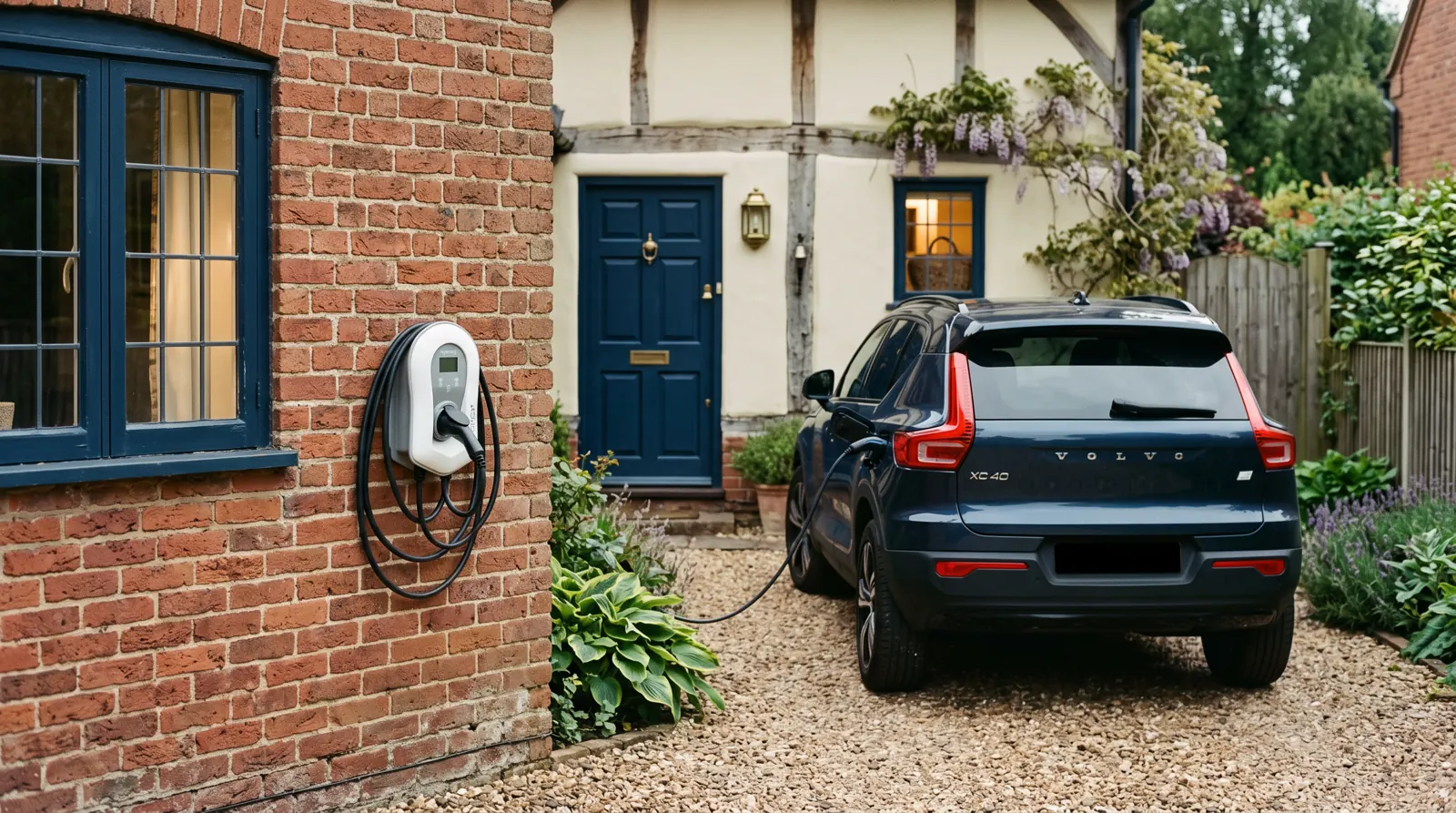
What an EV charger costs to install in Maidstone
A typical EV chargepoint installation in Maidstone costs from £1,000. We assess your property’s electrical capacity and the route from the consumer unit to the parking space, checking earthing, protective devices, cable routing and available load before specifying a safe, standards‑compliant installation.
| Item | Price |
|---|---|
| Fitted EV chargepoint | From £1,000 |
| Included | Parts, labour, testing, certificate and VAT |
| Potential reduction | About £500 where you qualify |
| Supply upgrade | Quoted separately if required |
Your written fixed price won’t increase provided the agreed scope remains unchanged. Long cable runs, difficult access, groundworks, or a DNO supply upgrade can alter the specification; DNO charges are excluded. We’ll confirm whether load management is needed to protect the consumer unit from overload. Regular charger maintenance, including visual checks and prompt fault reporting, helps keep charging dependable and safe.
Grants available right now
As of 1 April 2026, the OZEV EV chargepoint grant offers up to £500 per socket to eligible flat owners, renters with private off‑street parking and certain landlords; most owner‑occupied houses are not eligible. The scheme is stated to run until 31 March 2027 and is described by the government as its final year, so check official deadlines before committing to work.
We will confirm eligibility, including your tenure, parking arrangements and property type, before providing a price. Your installer must be OZEV‑approved to submit the claim on your behalf; the grant is normally deducted from the installation cost if the claim is successful. We will also assess whether your existing supply and consumer unit can safely support the additional load. A 7 kW chargepoint will often require notification to your local distribution network operator (for example, UK Power Networks in Kent) and may trigger a supply‑capacity check.
Common misconception: it is sometimes said you must upgrade your consumer unit when installing a chargepoint — that is not universally required. The legal and safety duty is to ensure the installation complies with current wiring regulations and that the installer assesses and, if necessary, upgrades equipment to achieve a safe installation. As schemes and requirements can change, review the official guidance each April.
Which charger suits your home
The right chargepoint depends on your car, parking layout and available electrical capacity, not simply the highest advertised kW rating. We’ll assess whether a 7kW unit suits your daily mileage, off-street parking and consumer unit capacity. Most Maidstone homes use single-phase supplies, making 7kW practical where the installation is compliant.
| Home factor | Suitable approach |
|---|---|
| Limited supply capacity | Chargepoint with load balancing |
| Overnight parking | 7kW smart chargepoint |
| Lower daily mileage | Adjustable charging current |
| Solar or tariff use | App-controlled scheduling |
Smart meters can help you understand household demand, but they don’t replace electrical assessment. We specify equipment with appropriate protective devices, earthing arrangements and weather protection. Where existing demand is high, dynamic load balancing can reduce charging output temporarily, helping prevent overload while keeping your home’s essential circuits operating safely.
What is involved on the day
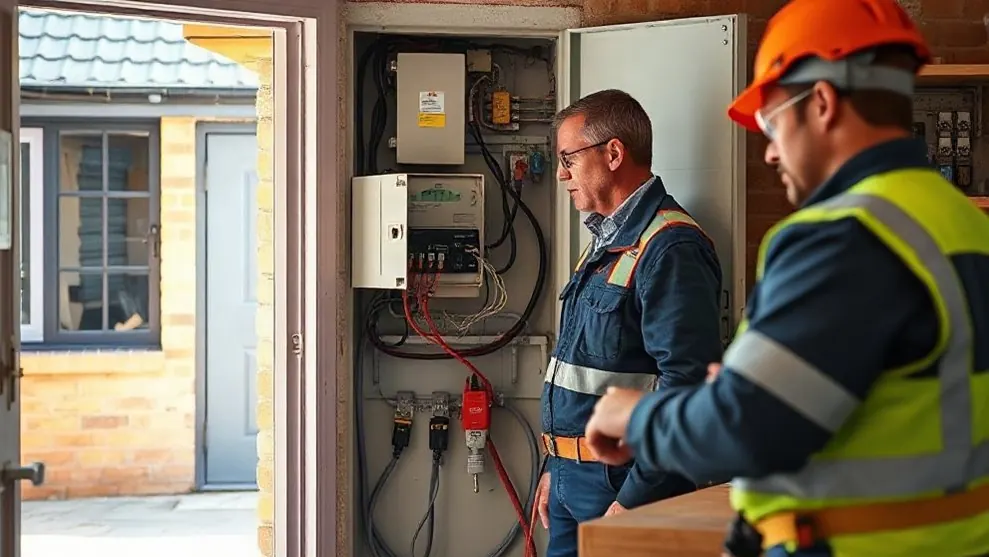
Once we’ve confirmed the chargepoint rating and any load-management requirements, we’ll isolate the relevant circuits, install the dedicated supply and protective devices, then fit and test the chargepoint. Before work begins, our site visit checks cable routes, mounting position, earthing arrangements and access to the consumer unit.
We’ll complete a wiring inspection where existing circuits or containment are involved, identifying unsuitable VIR, rubber or damaged cable before connecting anything. If required, we’ll arrange a brief temporary disconnection so work can be completed safely and without live alterations.
We’ll use appropriately rated cable, RCD protection and circuit labelling in line with current requirements. After installation, final testing verifies polarity, continuity, insulation resistance, earth-fault loop impedance and protective-device operation. We’ll explain the controls, hand over certification and leave the work area tidy.
Whether your supply can take it
Before adding an EV chargepoint, electric shower, heat pump or other high-demand equipment, we’ll assess whether your existing supply, consumer unit and main protective device can safely support the additional load. We calculate likely maximum demand, consider diversity appropriately, inspect cable condition and confirm protective-device ratings. This supply assessment identifies available load capacity without relying on assumptions or simply adding equipment ratings together.
We’ll also check for signs of ageing installation materials, overheating, inadequate earthing or unsuitable consumer-unit arrangements. Where the incoming supply or service fuse is limiting, we’ll explain the options and coordinate with the distribution network operator where required. Fuse upgrades and meter relocation are not routine electrical alterations; they require correct authorisation, safe isolation and compliant installation. We’ll provide clear recommendations before work proceeds.
Driveways, garages and on-street parking in Maidstone
Parking arrangements in Maidstone’s varied neighbourhoods shape how we plan a safe, practical EV chargepoint installation. For a private driveway in suburban areas such as Loose, East Farleigh or Weavering — where many semi‑detached 1930s and 1950s houses have extended driveways — we assess the likely cable routes from the house to the kerb, appropriate mounting height for the unit, vehicle access and protection against impact from car gates or reversing vehicles. In older town centre terraces around Week Street and the Mill Street conservation area, we also consider stone or cobbled drive surfaces when routing cables. We’ll check driveway lighting in neighbourhoods like Barming and Park Wood, ensuring any new circuits and external equipment are suitably rated for exposure to Kent weather and correctly protected for the type of detached and semi‑detached properties common there.
In a garage — for example an attached single garage typical of post‑war houses in Heath and Park, or a converted coach house in the St. Peter’s Street area — we check the consumer unit capacity, cable containment and earthing before selecting the most suitable chargepoint position. Garage ventilation matters in tighter, unventilated garages often found in older town centre properties off High Street, where enclosed spaces may accumulate heat or fumes, and the unit must remain accessible without creating a trip hazard given the lower clearances in many Victorian and Edwardian properties near the river Medway.
For on‑street parking on residential streets such as parts of Fant and Loose Road, we can’t run cables across pavements or public land owned by Maidstone Borough Council. A chargepoint must serve your vehicle from your property boundary without obstructing pedestrians using busy routes like Tonbridge Road or the footways around the Fremlin Walk shopping area, so we’ll explain realistic options for residents whose parking is on street rather than in a driveway — for example using existing private forecourts in Grove Green or exploring community charging hubs in places like the Allington industrial estate — tailored to the particular property types and parking patterns in each part of Maidstone.
Certificates and DNO notification
Wherever the chargepoint is positioned, we’ll certify the completed electrical work and handle the required Distribution Network Operator (DNO) notification. Before energising, we inspect the new circuit, protective devices, earthing arrangements and load-management settings, then complete testing in accordance with BS 7671. You’ll receive the appropriate electrical installation certificate for the work undertaken, with test results and circuit details recorded clearly.
DNO notification confirms that the local network operator has been informed where notification is required for the connection or equipment installed. This helps guarantee the supply network has accurate records and allows any necessary network assessment to be considered.
Certificate retention matters: keep your certificate with property records, alongside manuals and commissioning information. It provides evidence of compliant installation, supports future alterations, and gives electricians essential information when inspecting or extending the installation.