What an EV charger costs to install in Maidstone
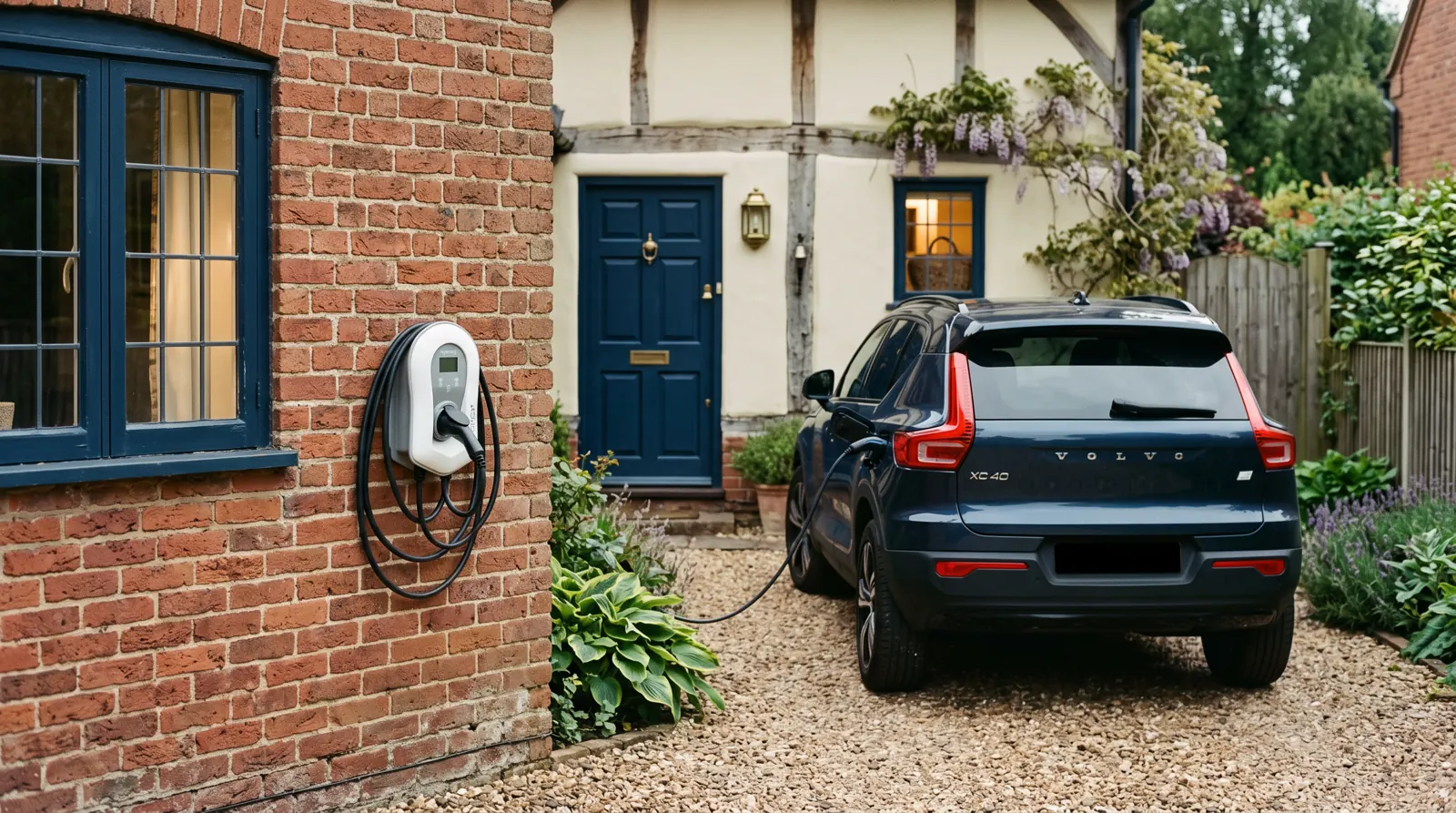
An EV chargepoint installation in Maidstone costs from £1,000 fitted (including VAT, parts, labour, testing and certification). We’ll survey your supply, earthing arrangement, cable route and consumer unit capacity before issuing a fixed written price; costs can rise where additional protection, longer cabling or supply work is required.
Job / Price / What’s included EV chargepoint — From £1,000 — Parts, labour, testing, certificate, VAT Fault finding — £80/hr — Investigation and diagnosis Consumer unit replacement — £500–£700 — Parts, labour, testing, certificate, VAT
We specify suitable protection and installation methods for your EV model types, while considering installation aesthetics without compromising cable containment or access. Prices exclude plaster decoration, asbestos removal, DNO charges and scaffold.
Grants available right now
Most owner-occupiers are not eligible for an OZEV grant; however, flat owners and renters with private off-street parking, and some landlords, may receive up to £500 per chargepoint socket for installations completed by 31 March 2027. The £500 rate has applied since 1 April 2026, replacing the previous £350 payment, and the government describes 2026/27 as the scheme’s final year (this is the announced position but subject to change by the relevant authorities).
We will confirm grant eligibility before providing a quote by checking your tenure, parking arrangements and whether the proposed chargepoint meets the scheme’s technical and installation requirements. An OZEV‑authorised installer must submit the claim on your behalf; do not assume funding is secured until OZEV accepts the application. Keep evidence of occupancy or landlord status available and allow extra time before installation, as application deadlines and processing times can affect scheduling. Check the official OZEV guidance each April because grant rules, payment levels and closing dates can be amended.
Which charger suits your home
Once grant eligibility is clear, we’ll specify a chargepoint around your vehicle, daily mileage, parking position and the capacity of your existing electrical installation. A 7kW smart unit suits most Maidstone homes, provided the supply and consumer unit are appropriate. We’ll favour compliant equipment with load balancing, scheduled charging and smart integration, helping protect the installation while using cheaper overnight tariffs.
| Home situation | Suitable choice | Reassurance |
|---|---|---|
| Driveway, regular mileage | Tethered 7kW | Ready each morning |
| Shared or narrow parking | Untethered 7kW | Flexible, tidy access |
| Limited supply capacity | Load-managed smart unit | Safer demand control |
We’ll also plan cable management so leads don’t create trip hazards or obstruct pavements. For listed, Victorian or post-war properties, charger position and wiring routes need particular care, including any older cable types.
What is involved on the day
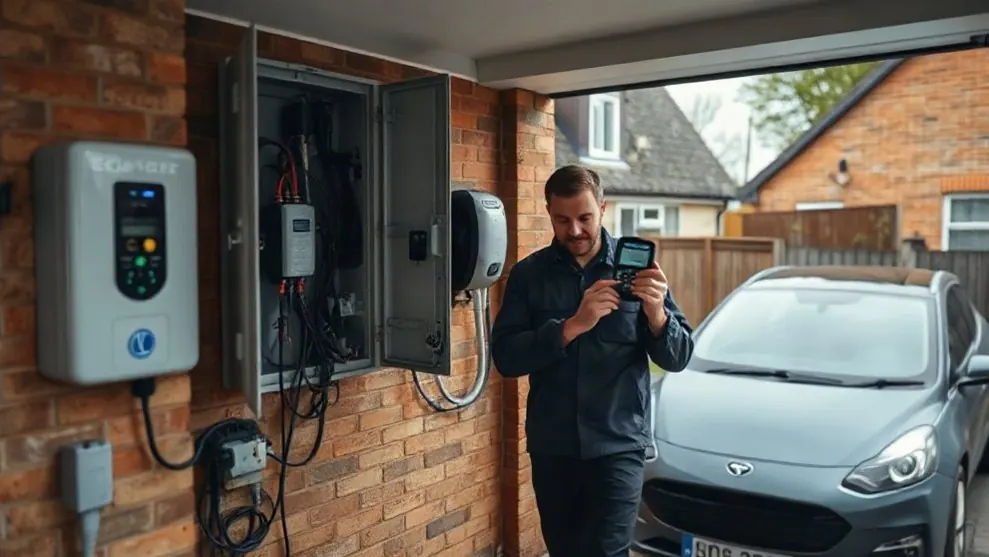
On installation day, we’ll isolate the relevant circuits, confirm the agreed cable route and chargepoint position, then check the supply capacity and consumer unit before work begins. We’ll protect work areas, maintain safe driveway access and agree any changes identified since the Site survey.
We’ll install dedicated containment and cabling, avoiding concealed services and preserving fire barriers where penetrations are needed. Cable routing is secured, suitably supported and protected against mechanical damage, weather and UV exposure. We’ll fit the chargepoint, required protective devices and earthing arrangements in accordance with BS 7671 and manufacturer instructions.
After testing, we’ll energise the installation, demonstrate charging controls and provide certification. We’ll also explain any permit requirements affecting parking bays, listed-building fabric or communal areas before work proceeds.
Whether your supply can take it
Before we specify a chargepoint, we’ll assess whether your incoming supply, earthing arrangement and consumer unit can safely support the additional sustained load. We’ll check the service fuse rating, main switch, meter tails, protective devices and spare capacity, alongside your normal peak demand from cooking, heating and other high-load circuits.
Where capacity is limited, load balancing can automatically reduce charging output when household demand rises, helping prevent overload without compromising protection. We’ll also confirm that the earthing system is suitable for EV charging and install the required protective measures in accordance with BS 7671.
If the existing equipment is unsuitable, we’ll explain whether remedial work, a consumer unit upgrade or a meter upgrade is needed. We’ll identify any Distribution Network Operator notification or approval requirements before installation.
Driveways, garages and on-street parking in Maidstone
In Maidstone and its surrounding neighbourhoods such as Barming, Penenden Heath, Allington and Coxheath, your parking arrangement determines the safest, most practical route for the charging cable and chargepoint at your property. For the many semi‑detached and detached homes with front and off‑street driveways typical of suburbs like Loose and Park Wood, we’ll normally position the unit so its tethered lead reaches the vehicle without crossing the pavement, access route or a neighbour’s land — for example on 1930s‑built semis in Heath and older Victorian terraces in the town centre we site the equipment to avoid traversing public walkways. In Maidstone’s newer estate areas such as Grove Green and the 1990s developments around Senacre, we also take account of drive width and planted verges when choosing the mounting point. Cables in Maidstone that must be buried or run across exposed garden areas need suitable mechanical protection to meet local installation practice, and the chargepoint is mounted clear of likely impact from garage doors and garden gates commonly found on properties in Fant and East Farleigh.
In single‑garage and double‑garage properties across Maidstone — for example the single‑bay brick garages typical of 1960s housing in Vinters Park or the deeper tandem garages in older Allington homes — we assess lighting, moisture and vehicle clearance and check whether the charging lead can be stored safely without fouling shelving or bikes. Where the garage is a communal block, such as those serving pairs of flats on the Brunswick Street terraces or the purpose‑built garage rows off Barker Road, we require landlord or managing‑agent consent, defined ownership of the electrical supply and a routing solution that does not obstruct the shared escape paths commonly used by residents of the town’s flat conversions.
On‑street charging in Maidstone town centre, on residential streets in Maidstone East and in conservation areas around the River Medway is rarely suitable for a standard domestic installation because trailing leads across public footways there would create trip hazards and can require permission from Kent County Council as the highway authority or from Maidstone Borough Council where local controls apply. We will not carry out installations in Maidstone that leave cables accessible to damage or open to unsafe public use on streets such as Mill Street or High Street where pedestrian flows and market activity are high.
Certificates and DNO notification
Once we’ve installed and tested your Maidstone EV chargepoint, we’ll provide the appropriate electrical certification and notify the distribution network operator (DNO) where required. Our testing confirms protective devices, earthing arrangements, polarity, insulation resistance and chargepoint operation meet the applicable standards.
We’ll issue the correct certificate for the work, together with test results, so you have a clear record for your property. As a NICEIC approved, Part P registered contractor, we also handle Building Regulations notification where applicable.
DNO liaison is particularly important where the installation affects supply capacity, uses load management, or requires prior approval under the relevant connection process. We’ll submit accurate technical details and respond to reasonable network queries. Your chargepoint shouldn’t be put into service until essential safety checks and any required notifications have been completed.