What this job involves and what it costs
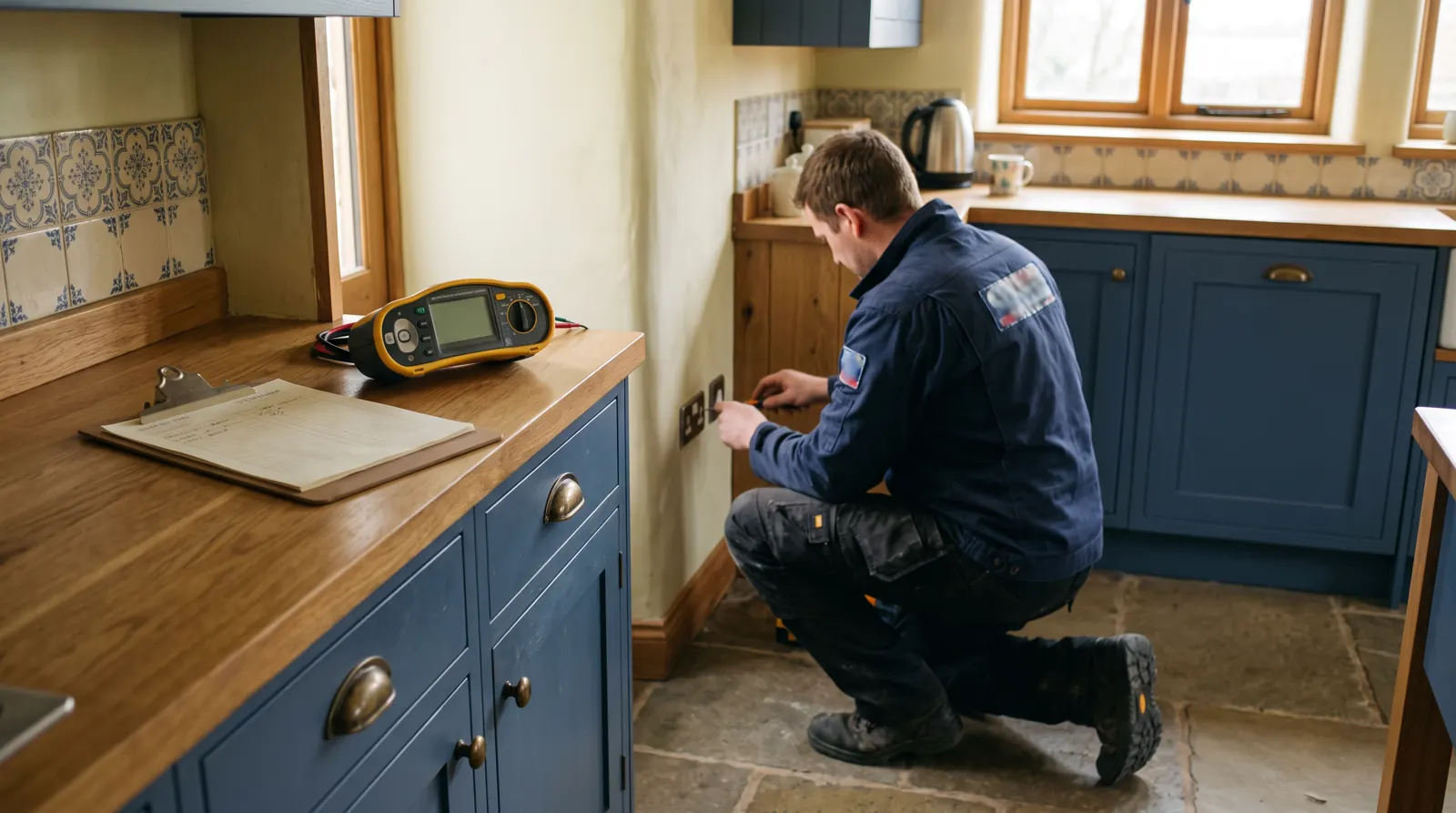
RCD testing verifies that your consumer unit’s residual current device trips fast enough to reduce shock and fire risk; our labour rate is £80/hour (inc. VAT) with a fixed written price provided upfront. Serving Maidstone and surrounding areas including Bearsted, Penenden Heath and Tovil. Work is certified to relevant electrical safety standards and guaranteed—results recorded, issues explained and remedial recommendations provided.
When you need it
- Your consumer unit got damp after river flooding or a burst pipe and you’re worried about it.
-
This usually means water may have reached the fuse box and could be causing unsafe faults or corrosion.
-
Your outdoor power points or garden lights stop working after rain.
-
That often indicates moisture is getting into the fittings or sockets and cutting out protection.
-
Temporary power for building work, a party, or refurbishment keeps tripping or behaving oddly.
-
This generally suggests the temporary supply or connections aren’t protected correctly or are overloaded.
-
Your lights flicker or go out whenever the kettle or shower is switched on.
-
That usually points to an RCD or protective device reacting to a fault or excessive load on the circuit.
-
Sockets trip repeatedly when you plug in a particular appliance.
-
This often means the appliance has a fault or the circuit’s protection is no longer suitable.
-
You notice burning smells, scorched socket plates, or visible damage to cable insulation.
-
That normally indicates degraded wiring that could cause earth faults or a fire risk.
-
You’ve had recent electrical work, new circuits, or changes and now things aren’t behaving as they did before.
-
This typically means the modifications weren’t tested properly and protections may not be set up correctly.
-
Your home is older (especially in Maidstone) and insulation looks brittle or wiring is aged.
- That usually means the protective devices may no longer be adequate for current conditions and should be checked.
What it costs in Maidstone
In Maidstone we offer RCD testing, fault-finding and EICRs with clear fixed prices and written estimates before work begins to help minimise downtime. Most faults are traced within one to two hours and any remedial work identified in an EICR will be quoted separately.
| Job | Price | What's included |
|---|---|---|
| Fault-finding | £80/hour | Labour, testing and certification where applicable |
| EICR, up to three-bed home | £150–£250 | Inspection, testing and EICR report |
| EICR, four- to five-bed home | £250–£350 | Inspection, testing and EICR report |
| Commercial EICR | £30–£50 per circuit | Inspection, testing and EICR report |
| Consumer unit replacement | £500–£700 | Labour, parts, testing and certification |
| Emergency attendance | £120/hour | Emergency labour, testing and certification where applicable |
Not included: plaster repairs, decoration, asbestos removal, DNO supply-upgrade charges, scaffold and access equipment.
What is involved on the day
On the day, we’ll survey the installation, agree any required isolation and confirm safe access to the consumer unit. We’ll install or assess the RCD as required, then carry out compliant testing to verify trip times and protective operation. Once satisfactory, we’ll provide the relevant certificate or test results for your records.
Survey and isolation
Before RCD testing begins, we’ll survey the installation, identify the relevant consumer unit and circuits, and check for any conditions that could make testing unsafe. Our survey planning confirms access arrangements, circuit identification, vulnerable equipment and any loads that may be affected by interruption of supply. We’ll ask you to identify alarm systems, medical equipment, IT equipment, heating controls and appliances requiring controlled shutdown.
We then follow appropriate isolation procedures where required, informing occupants before supplies are switched off and securing the means of isolation against inadvertent reconnection. We’ll verify that circuits are dead using approved test equipment before work that requires isolation. If we find damaged accessories, signs of overheating, water ingress, exposed live parts or unsuitable consumer-unit conditions, we’ll explain the risk and agree the safest next step before proceeding.
Installation
Once the survey and any required isolation are complete, we’ll test each applicable RCD at the consumer unit using calibrated test equipment. We’ll confirm circuit identification, check access and enclosure condition, and make sure protective conductors and bonding arrangements are suitable before restoring supplies. Where older Maidstone properties contain aluminium bonding or legacy wiring, we’ll assess visible terminations carefully and advise if further electrical work is needed.
We’ll keep you informed throughout, supporting consumer awareness of any temporary loss of power and equipment that should remain switched off. Our work follows relevant BS 7671 requirements, with appropriate precautions for occupied homes, sensitive electronics and essential loads. We’ll reinstate covers securely, remove any temporary notices and leave the work area safe. If defects require remedial work, we’ll explain the options and provide a fixed written price before proceeding.
Testing
We’ll begin by confirming which RCDs protect your circuits, discussing any essential equipment and arranging a brief, controlled interruption where required. We identify circuit labels, check the consumer unit condition and assure sensitive loads, such as computers, alarms or refrigeration, are managed safely before testing.
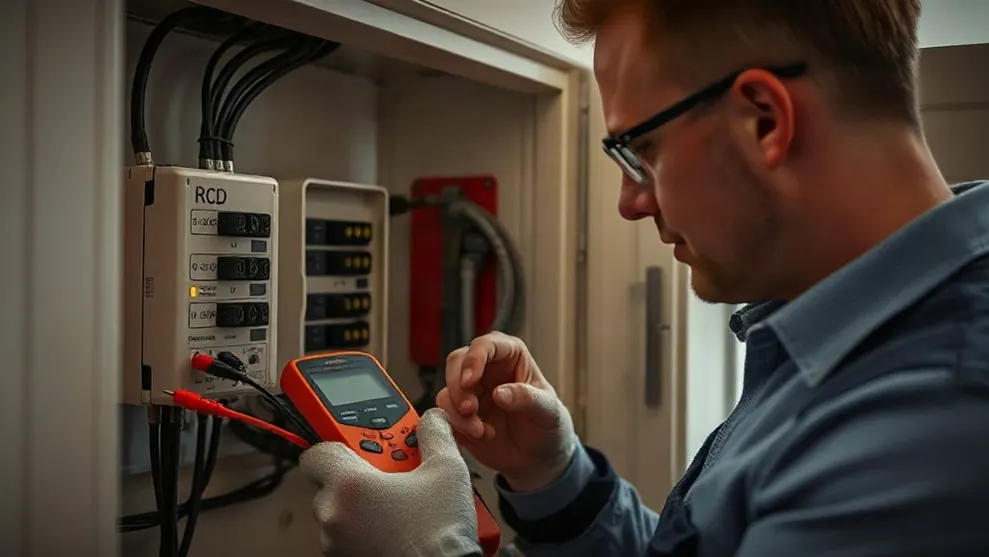
Using calibrated instruments, we measure RCD trip times and trip currents to verify disconnection occurs within the required limits. We test at rated residual current and, where appropriate, higher test currents, confirming the device responds reliably. Socket testing checks polarity and protective conductor connections at accessible points, while earth continuity testing helps verify that fault current has a dependable path to earth.
We’ll also inspect for signs of heat damage, loose connections or unsuitable alterations affecting installation safety. Any defect found is explained clearly, with safe remedial options provided before further work proceeds.
Certificate
Clarity is maintained on the day by recording the RCD test results, circuit details and any observations on the appropriate electrical documentation. We identify the consumer unit, protective devices tested, measured trip times and test currents, then note any limitations affecting the inspection. Your certificate or test record should clearly state whether results meet relevant safety standards and BS 7671 requirements.
Where defects are found, we explain their significance and recommend proportionate remedial work. A satisfactory result doesn’t guarantee the condition of untested wiring or equipment, but it confirms the recorded RCDs operated correctly at the time of testing. We’ll provide documentation promptly, helping you retain evidence for landlords, insurers or property records. Certificate validity depends on the document type, the installation’s use, condition and any legal duties applying to your premises.
Options and what we recommend
The right option depends on the RCD type, its test result and the circuits it protects, so we’ll first confirm whether it resets correctly and trips within the required time. We then assess RCD selection and Installation placement, ensuring protection suits the circuit, load and environment.
| Finding | Our recommendation |
|---|---|
| RCD trips within limits | Retain it and record results |
| RCD fails or will not reset | Investigate faults and replace if necessary |
| Shared circuits cause nuisance tripping | Separate circuits or use RCBO protection |
We’ll recommend a suitably rated replacement where testing identifies deterioration, incorrect sensitivity or inadequate coverage. For older consumer units, particularly where wiring condition is uncertain, we’ll explain whether targeted improvements are appropriate. Any work is isolated, tested and completed only after we’ve agreed a fixed written price.
Rules and certificates
Although an RCD test itself does not usually require Building Regulations notification, remedial work may be notifiable in certain circumstances: for example, new circuits, consumer‑unit replacements and electrical work in bathrooms or other special locations can be notifiable under Building Regulations Part P. We will confirm whether any recommended repair is notifiable and explain the notification process before work begins.
As a NICEIC‑approved, Part P‑registered contractor, we are able to self‑certify some types of notifiable work and notify Building Control on your behalf where the work meets the relevant eligibility criteria; you do not always need to arrange Building Control yourself, but you may choose to. Where appropriate, we issue an Electrical Installation Certificate (EIC) for new circuits or consumer‑unit replacements; additions to an existing circuit will normally receive a Minor Electrical Installation Works Certificate. If testing forms part of a wider inspection, the findings may be recorded on an Electrical Installation Condition Report (EICR). Keep all certificates safely: they provide evidence of electrical work and safety standards and are often required for future property records or transactions.
Older homes around Maidstone
Many of the Victorian terraced houses in central Maidstone and in Tovil, typically built between the 1840s and 1900s, require careful RCD assessment because we often find VIR (vulcanised India rubber) or other rubber‑insulated cables and later ad‑hoc additions to the consumer unit that can affect protective operation. In the terraces off Week Street and the older streets around the Lockmeadow area we commonly see mixed circuits and historic spurs; these conditions can reduce insulation resistance, compromise earth continuity and impair how quickly an RCD will disconnect a fault.
In the post‑war estates of Shepway, Park Wood and Senacre — where many semi‑detached houses and bungalows were built in the 1950s and 1960s — aluminium wiring is a particular concern. On streets such as Monks Way in Park Wood and parts of Shepway we have found aluminium conductor terminations that have loosened or oxidised, increasing resistance and local heating in ways an RCD alone may not detect. When we work in Maidstone’s suburbs like Fant or Loose Road where 1960s council houses were later owner‑occupied and modified, we test the installed RCDs, confirm their rating and trip times for the circuits present, inspect protective bonding at incoming services and consumer units, and ensure that final circuits are correctly identified and labelled.
Where properties in Old Loose, Barming or the town centre’s listed terrace conversions require period rewiring or sympathetic alterations to meet modern protective standards, we explain the remedial options that suit that specific Maidstone neighbourhood and housing type, and provide a fixed written price before any work begins.
How long it takes and whether you lose power
For Maidstone homes with older or altered wiring, RCD testing is usually completed during a planned inspection with only brief, controlled interruptions to power. We isolate circuits as needed to test trip times, rated residual current and correct operation safely. A straightforward consumer unit test commonly takes minutes per RCD, although wider fault-finding, circuit identification or remedial work can extend the visit.
We’ll explain the expected downtime before testing starts, so you can protect sensitive equipment, save computer work and plan around refrigeration, heating controls or medical equipment. Where continuous supply is important, ask us about practical backup options, such as charging devices beforehand or arranging testing at a suitable time. We restore power after each test stage and confirm that circuits are operating correctly. If an RCD fails to reset, we’ll investigate safely and advise you before undertaking any further work.