What we do and who it is for
Commercial solar PV design and installation for businesses, landlords and agricultural sites, with fixed written prices covering equipment, labour, testing and certification. Serving Maidstone and the ME14 area, including warehouses, offices, retail premises and industrial units. All installations carry full electrical certification and warranty-backed guarantees; proposals include tailored system sizing, optional battery storage, export metering and monitoring where they improve returns.
Typical jobs
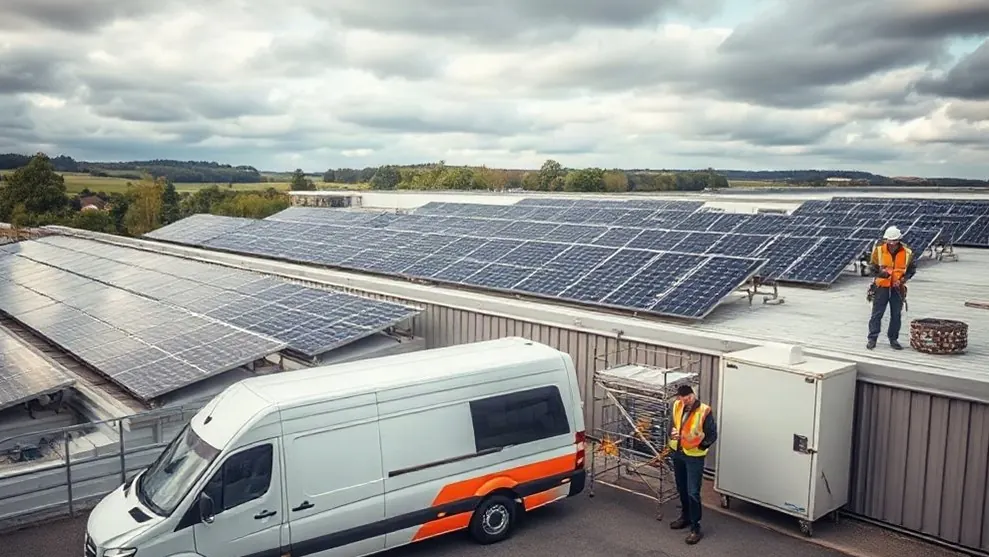
Typical commercial solar jobs we carry out in Maidstone focus on roof-mounted PV arrays for offices and warehouses in The Mall/Lashenden and retail units in Week Street, as well as ground‑mounted systems for agricultural land around Nettlestead and Marden. We assess whether your specific building in areas such as Barming, Park Wood, or Allington can safely host generation, can be connected to the local network at the Cathedral/High Street substations, and whether generated power can be used on site in locations like Fant Lane industrial units or the workshops off Tonbridge Road.
- Roof surveys in Maidstone cover the structure and typical roof ages (1930s terrace roofs in the town centre, 1960s flat roofs on Park Wood industrial estates), orientation to the south/south‑west exposures found on Quarry Wood and access and shading from mature lime trees in the St. Peter’s area.
- We size PV arrays around daytime demand profiles for common local premises: distribution warehouses on Bearsted Road, schools such as Bower Grove (1960s/70s buildings) and Maidstone Grammar (older stone buildings), and retail units in the Fremlin Walk area.
- We specify inverters, isolation equipment and generation monitoring compatible with the local DNO supply points serving Maidstone East and West feeders, ensuring devices suit the installation types found on Heavers Farm industrial estate and the small commercial kitchens in Sandling.
- Where operational loads in sites such as light‑industrial units on Bower Lane or agricultural enterprises near Staplehurst justify it, we plan battery integration sized to the usage patterns of those properties.
- Panel maintenance plans, inspections and fault checks are written to match access arrangements and roof ages in Maidstone: pitched Victorian slate roofs in the town centre, mid‑20th century metal roofs on Warehousing Park, and flat membrane roofs on newer retail extensions.
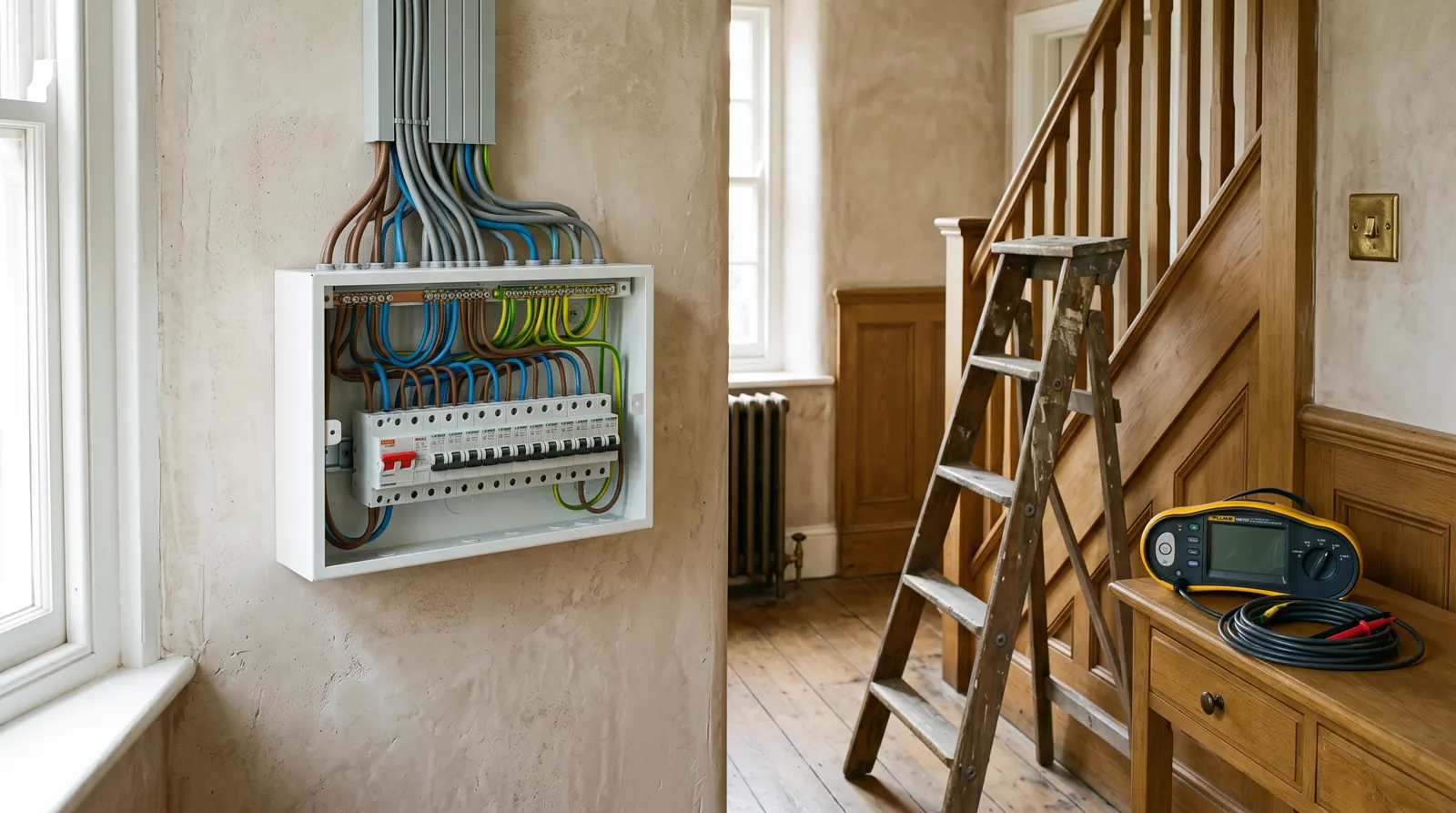
For Maidstone businesses we most commonly consider warehouse roofs in Bearsted and Allington, workshops around Willington Street, schools in Park Wood and Sandling, farms on the outskirts near East Farleigh and multi‑unit commercial premises in the Fremlin Walk precinct. We review the specific distribution equipment on site (for example older fuseboards in 1950s/60s retail premises on Week Street), cable routes from the roof to the consumer unit and the available capacity at the local cut‑out before specifying works. On older or altered properties in Maidstone — particularly terraced properties from the late 19th/early 20th century in the town centre or post‑war commercial buildings on Barker Road — this can identify remedial electrical work needed before installation. We also plan access, shutdowns and programme sequencing around Maidstone’s trading patterns (market days on the High Street, daytime deliveries to Fremlin Walk) to minimise disruption to trading, deliveries or production.
What it costs
Commercial solar costs in Maidstone are quoted per job after a free survey, as final price depends on roof condition, array size, access, supply capacity and any battery requirement. Below are typical charges and what each price covers.
| Job | Price | What's included |
|---|---|---|
| Commercial solar installation | Quoted per job after a free survey | Parts, labour, testing, certification and VAT |
| Commercial EICR | £30–£50 per circuit | Inspection, testing and report |
| Supply fault finding | £80/hour | Labour; most faults traced in 1–2 hours |
Not included: scaffold, specialist access equipment, DNO supply-upgrade charges, asbestos removal, plaster repairs and decoration.
How the work is planned
We start with a free site survey to assess roof condition, usable area, shading, access, existing electrical supply and your daytime demand. We then model likely generation against half-hourly consumption, size the array and inverter, and identify whether battery storage improves payback.
Before scheduling, we agree working hours, delivery routes, scaffold locations and isolation requirements with your facilities team. Project phasing keeps trading areas operational where possible: we can complete roof works, cabling and final connection in planned stages. Stakeholder coordination covers building managers, tenants, roof contractors and network contacts, so access and shutdowns are controlled rather than costly surprises.
We provide a fixed written scope showing equipment, programme, exclusions and payment stages. If surveys reveal roof repairs, switchgear upgrades or restricted access, we price these separately before work begins.
Compliance and documentation
For a Maidstone solar installation, we’ll provide the electrical certification, commissioning records and inverter/generation documentation needed for handover, insurer enquiries and future maintenance. Retain this legal and contractual paperwork with system warranties, design information and any distribution-network approvals to help with future fault diagnosis, insurance claims and asset management.
We’ll also advise proportionate maintenance schedules: visual checks, inverter monitoring, generation reviews and periodic inspection of associated electrical equipment. Commercial fixed-wire testing does not have a single statutory interval; commonly used frequencies (for example, five-year for offices, three-year for some industrial premises, or annual for high-risk environments) come from IET Guidance Note 3 as recommended practice rather than a legal requirement.
The Electricity at Work Regulations 1989 require that electrical systems are maintained so as to prevent danger. An up-to-date EICR is not universally legally mandatory but may be requested by insurers, landlords or licensing bodies, so we’ll help align records with those requirements.
Minimal disruption and out-of-hours working
Planning commercial solar works around your operating hours helps us reduce downtime, protect access routes and keep installation costs controlled. We’ll agree delivery windows, roof-access arrangements, isolation periods and safe work zones before work starts, so staff, customers and vehicles can continue moving safely.
For occupied premises, phased installs can separate roof mounting, cable containment, inverter installation and commissioning into manageable stages. This limits the length of any electrical shutdown and allows us to coordinate with your facilities team.
Where practical, we can schedule noisier tasks or final changeover out of hours. Out-of-hours labour is charged at £120 per hour, compared with £80 per hour during standard working time, so we’ll only recommend it where avoided disruption justifies the added cost. Fixed pricing sets these arrangements out clearly before installation begins.
Premises and sites around Maidstone
From the industrial units south of Eclipse Park in Kent Science Park to office blocks in King Street, warehouses around New Cut and retail premises in the Fremlin Walk area of Maidstone, we’ll assess the condition of each roof, the available electrical capacity, daytime demand and export options before specifying a solar system. On older terraced shop‑fronts along Week Street and Victorian slate roofs in Barming Road we check structural loading and roof covering age; on more recent commercial buildings at Eclipse Park and the post‑war industrial units in Parkwood we evaluate flat roof membranes and access for safe installation and maintenance. We’ll also review half‑hourly consumption data, the main supply rating for town‑centre sites served from the St Peter’s Street / Gabriel’s Hill substations and the distribution arrangements for estates such as Fant and Bearsted, so any array is sized to displace purchased electricity for businesses rather than create low‑value exports back to the grid.
For brownfield sites — for example former commercial yards off Tonbridge Road, disused parcels of land near the River Medway at Allington and undeveloped plots around the Fairmeadow area — we consider local ground conditions (made ground and river alluvium are common beside the Medway), likely cable routes into the nearest substations, drainage requirements on low‑lying sites, security fencing appropriate for locations such as the industrial estate at Hermitage Lane, planning constraints imposed by Maidstone Borough Council (including Conservation Area considerations around the town centre and Allington Lock) and connection costs to the 11/33kV network. A technically viable site in areas with old sewer runs or contaminated infill — frequently encountered in former quarry or riverside industrial land by the Medway — can still be uneconomic if electrical reinforcement or extensive civils work is required. We’ll identify those area‑specific costs early and provide a fixed written price before work begins.