What we do and who it is for
We design and install solar panel systems for homeowners, landlords and small businesses from fixed written prices based on roof and electrical assessment. Serving Maidstone and surrounding areas including Bearsted, Penenden Heath, Tovil, Barming and Loose. NICEIC-approved, Part P-registered residential installers; installations come with guaranteed workmanship and safety-checked electrical connections.
Typical jobs
From straightforward rooftop solar installations on semi-detached 1930s homes in Park Wood and residential bungalows in Allington, to larger systems for landlords with Victorian terraces in Maidstone town centre and small businesses on Earl Street, we size each job around roof space, electricity use and budget. In Bearsted and Loose we start with roof surveys to check south- or west-facing orientation, garden shading from mature lime trees, roof structure on older clay-tile pitches and safe cable routes into typical cellars and rear-return kitchens, then specify equipment that suits those properties.
Typical work in Maidstone includes:
- Standard roof-mounted arrays for owner-occupied semi-detached 1930s houses in Park Wood and mixed 1960s council houses in Shepway.
- Battery-ready systems where evening electricity use is high in modern, open-plan family homes in Kings Hill estates and new-build developments off Willington Street.
- Solar additions alongside EV chargepoints or electric heating on newer detached homes in Oad Street and river-front properties in St. Peter’s Street.
- Multi-property installations for landlords of Victorian terraces around Tonbridge Road and Maidstone town centre, including compliant testing and handover information for individual flats above shops on Earl Street.
On older Victorian terraces in the High Street conservation area or post-war semi-detached homes in Park Wood and Shepway, we also assess the existing wiring and typical consumer units from the 1980s before connecting generation equipment. This helps avoid unnecessary alterations while ensuring protective devices and earthing are appropriate for properties with loft conversions or cellar access in Loose and Bearsted. We explain access requirements for terraces and mews, likely disruption on narrow streets such as Week Street, and panel maintenance needs given Maidstone’s local weather exposure, so you can plan the work practically.
What it costs
Solar installation quotes in Maidstone are provided after a free survey because final specifications depend on factors like roof access, array size, battery storage and consumer unit capacity. Below are typical job items with their prices and what’s included.
| Job | Price | What's included |
|---|---|---|
| Consumer unit replacement | £500–£700 | Parts, labour and certification |
| EICR (home up to three bedrooms) | £150–£250 | Electrical inspection and report |
Not included: scaffold or access equipment, DNO supply upgrade charges, asbestos removal, plaster repairs or decoration.
How the work is planned
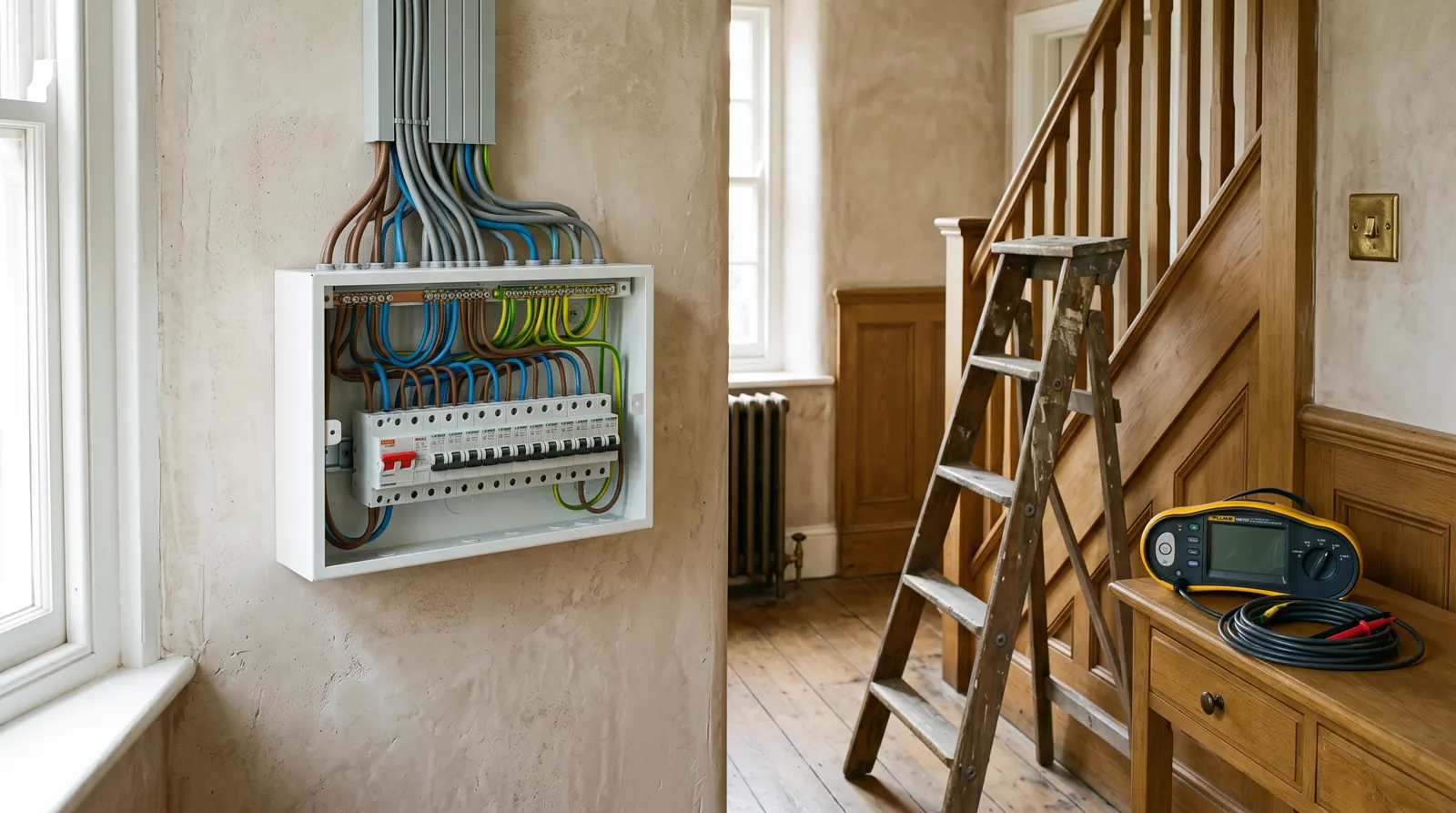
Before we specify a system, we survey the roof, assess shading and access, check the consumer unit and earthing, and confirm whether the existing supply can accommodate the proposed inverter and battery. Our site survey also measures usable roof area, orientation, roof condition, cable routes and a safe location for equipment. We’ll identify issues early, such as ageing VIR or aluminium wiring, limited consumer-unit capacity, or difficult scaffold access, so costs aren’t hidden later.
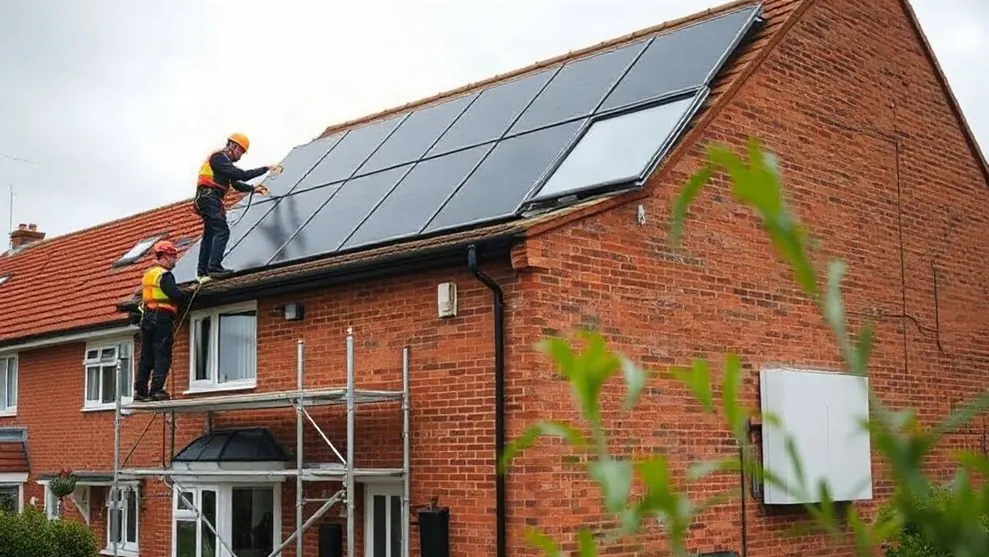
We then size the array around your daytime use, budget and likely export rather than simply fitting the maximum number of modules. The project timeline is agreed around scaffold availability, delivery dates and weather-sensitive roof work. We provide a fixed written price before work begins, including any essential electrical upgrades, so you can compare the return against the total installed cost.
Compliance and documentation
We’ll design and install your Maidstone solar system to current electrical and building‑regulation requirements, then provide the commissioning records, certificates and handover information for the installation. You’ll receive clear test results, circuit details and operating guidance, so future maintenance or alterations can be planned safely without repeating investigations.
Keep these records with your property papers: good documentation retention can support warranty claims, insurance enquiries, sale enquiries and fault‑finding. We’ll explain what each document covers and identify any existing consumer‑unit or earthing issues affecting the design.
Note on legal duties: there is a common misconception that fixed‑wire testing is a statutory requirement for all commercial premises — this is not strictly correct. The Electricity at Work Regulations 1989 require that electrical systems are maintained so as to prevent danger; specific test intervals are guidance rather than universal legal deadlines, though insurers, landlords or licensing bodies may require a current EICR as a condition of cover or tenancy. We’ll flag relevant regulatory updates and provide a fixed written price before work begins.
Minimal disruption and out-of-hours working
With the design, certificates and handover agreed, we’ll plan the installation around your household or business routine to keep disruption low. We’ll confirm access, scaffold timing, cable routes, isolation periods and working areas before arrival, so you can protect vehicles, stock and sensitive equipment.
Most roof work and internal electrical connections are completed during normal hours for safety and efficient inspection. We use dust sheets, controlled drilling and noise minimisation measures, and we keep cable runs tidy to reduce making-good costs. If your operation cannot pause, we can discuss phased works or out of hours attendance where practical. Our out-of-hours rate is £120 per hour, so we’ll explain the cost impact in writing first. We’ll also schedule any brief supply isolation at the least disruptive time, then test the system before restoring normal use.
Premises and sites around Maidstone
Across Maidstone we assess each solar installation with reference to the specific neighbourhood and property type. In the town centre and the Victorian terraces of Tovil — many of which date from the mid-to-late 19th century — we examine the smaller, often complex pitched roofs, limited roof space and the reality of shared access between properties. In Grove Green and Vinters Park, where much of the housing stock was built in the 1960s–1980s and features semi-detached and detached suburban roofs, we look for the larger, more regular roof areas that those estates commonly offer. In Park Wood and Senacre, where post‑war and 1970s council and private housing predominate, we take into account the mix of pitched and shallower roofs on terraces and semi‑detached homes.
When surveying in each Maidstone locality we check orientation relative to the local street layout, shading from the mature lime and sycamore trees that line many roads in town, shading from neighbouring buildings in tight terraces, the structural condition of roofs typical for the area and safe cable routes back to the consumer unit in houses of the relevant age. Rooftop constraints we encounter in Maidstone — for example the smaller slate roofs in Tovil or the shallow‑pitched concrete tile roofs in parts of Park Wood — can affect the number of panels we can fit, any scaffold required and therefore the fixed price we provide.
Where properties in Maidstone have suitable land, such as larger gardens in Vinters Park or backlands behind detached and semi‑detached homes in Grove Green, we may propose ground‑mounted arrays if the roofs are heavily shaded, poorly oriented for solar in that specific street or unsuitable for additional loading due to their age and construction. For installations across Maidstone we also consider local drainage patterns, security needs particular to each neighbourhood, the practicalities of trenching in streets with Kentish ragstone or clay subsoils, and the distance to the house’s electrical supply, so the proposed system remains proportionate to the expected generation and the installation costs for that part of Maidstone.