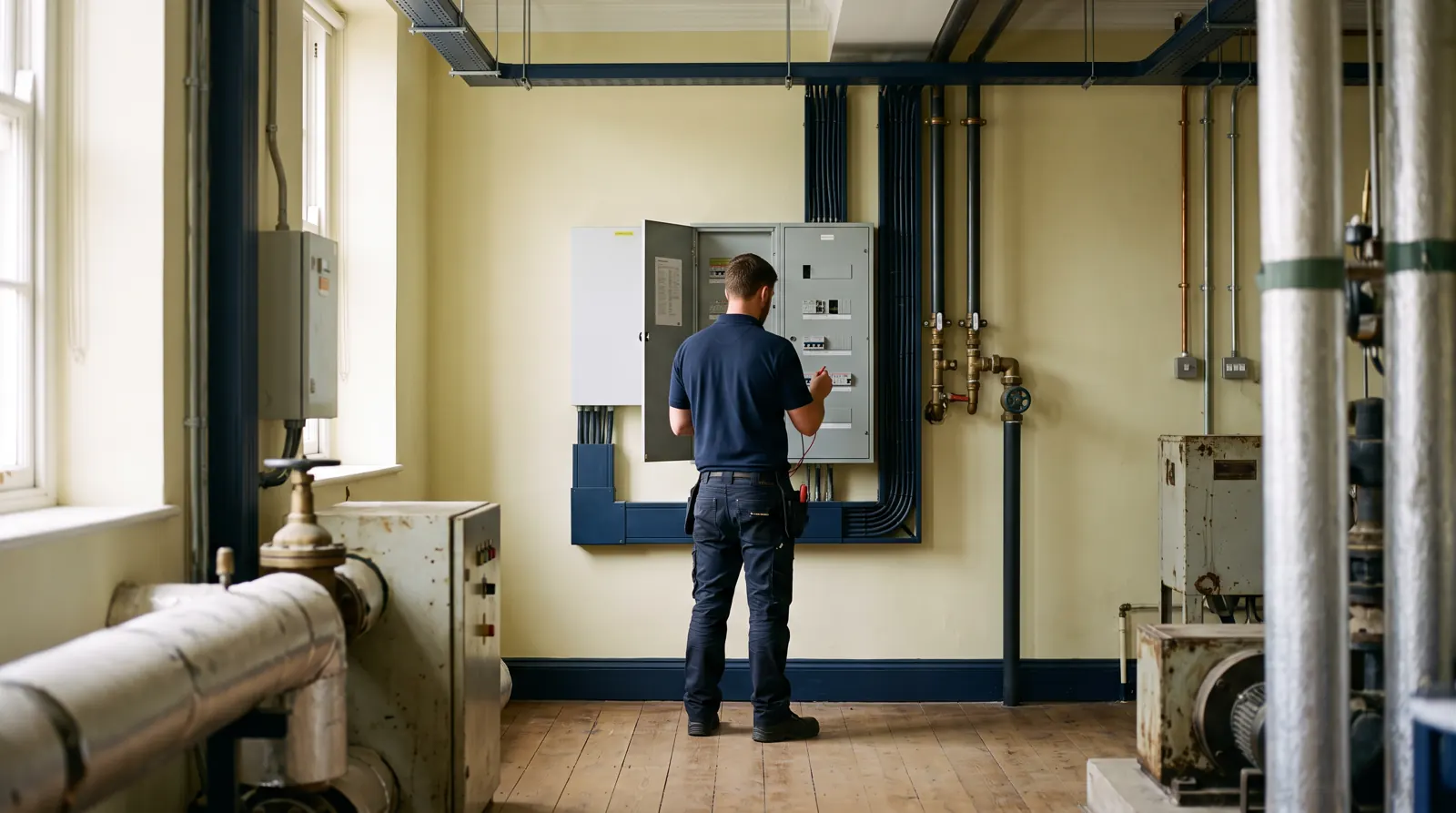

What we do and who it is for
Generator servicing from £95 per visit — routine inspections, maintenance and safety checks priced per unit and quoted in writing. Serving Maidstone, including Aylesford, West Malling, Tunbridge Wells and nearby Kent towns. All work comes with a 12-month service guarantee and is carried out by qualified engineers with industry certification and full paperwork provided.
Typical jobs
Typical generator servicing jobs we carry out in Maidstone and surrounding neighbourhoods such as Fant, Barming, Loose, Watch Oak and Shepway include scheduled oil and filter changes, battery testing and fuel-system inspections at properties ranging from Victorian terraces in Barming to 1970s semi-detached homes in Loose and purpose-built flats in the town centre. We plan work around your operating hours for offices on King Street and Tonbridge Road, isolate equipment safely at commercial units on Fleet Lane and record findings clearly for your maintenance file held at our Maidstone office.
- When inspecting generators at domestic properties in Fant and Shepway or at light-industrial units on Hermitage Lane, we verify guards, exhausts, cabling, earthing, alarms and fluid levels meet operational requirements for that specific site and property type.
- For diesel stored at larger properties such as care homes around Loose and business premises in the Aylesford Road area, we carry out fuel polishing to remove water, sediment and microbial contamination that can compromise reliable starting of standby sets.
- At council-owned blocks and converted Victorian houses in Barming and Maidstone town centre flats, we test starting batteries, chargers and automatic transfer sequences, then document readings, defects and recommended remedial actions tailored to the building’s age and electrical installation.
For sites within Maidstone borough we keep access, shutdown periods and reinstatement tightly controlled — whether working at a 1930s semi on Fant Lane, a 1960s retail unit on Earl Street or a modern office development off Churchill Way. If a fault is identified at a specific property in Loose, Watch Oak or Barming, we’ll explain its operational and compliance implications for that particular site and only then agree any further work. Our Maidstone-based records help you demonstrate that servicing at the named neighbourhood address has been completed methodically and that the critical standby equipment for that property remains ready for use.
What it costs
Generator servicing in Maidstone is quoted per job after a free survey because costs depend on the set’s size, fuel type, service history, access arrangements and any defects identified. We provide a fixed written price before work starts covering agreed labour, parts, testing, documentation and VAT.
| Job | Price | What's included |
|---|---|---|
| Generator service | Quoted per job | Inspection, testing, report |
| Fault finding | £80/hr | Diagnostic labour |
| Emergency attendance | £120/hr | First hour minimum |
| PAT testing | From £1.50/item | Recorded test results |
| Service contracts | Quoted per job | Scheduled compliance support |
Not included: asbestos removal, scaffold, access equipment, DNO charges, and plaster or decoration making good.
How the work is planned
Before servicing is scheduled, we’ll review the generator’s make, rating, fuel system, location, duty role and service records, then agree safe access and any required isolation arrangements. We’ll establish whether the set supports essential loads, operates automatically, or has a planned shutdown window, so servicing can be timed to limit operational impact.
Our schedule coordination considers site occupancy, delivery restrictions, noise-sensitive periods, fuel availability and access for equipment. We’ll confirm who can authorise shutdowns, provide keys or permits, and identify any dependent systems requiring contingency arrangements.
A proportionate risk assessment will address electrical hazards, moving parts, hot surfaces, exhaust gases, battery systems, fuel handling, manual handling and ventilation. We’ll also plan suitable work areas, barriers and communication routes, ensuring your staff know when the generator will be unavailable.
Compliance and documentation
Once the service plan is agreed, we’ll document the work completed, test results, identified defects and any recommendations for remedial action. You’ll receive clear service records that support record retention, asset management and future maintenance decisions. We’ll record generator operating condition, battery status, fuel arrangements, control functions and safety observations, with actions prioritised where necessary.
Regarding fixed electrical systems: it is a common misconception that precise inspection intervals (for example, “every five years for offices”) are legally prescribed; in fact the Electricity at Work Regulations 1989 do not set fixed inspection periods but require employers and dutyholders to ensure systems are maintained so as to prevent danger. Industry guidance such as the IET’s recommended inspection intervals (for example, around five years for offices, three years for industrial premises and more frequent checks in higher‑risk environments) is widely used to help meet that duty, and insurers, landlords or licensing bodies may request current documentation. Accurate records help you demonstrate control during regulatory audits and plan remedial work efficiently.
Minimal disruption and out-of-hours working
To minimise disruption, we’ll schedule generator servicing around your operating hours and agree access, isolation requirements and contingency arrangements in advance. We’ll confirm the planned shutdown window, responsible contacts, permit procedures and any requirements for maintaining essential loads before attendance.
Where servicing must take place outside normal trading periods, we can arrange After hours access with authorised keyholders, site security or facilities representatives. Our 24-hour emergency line also supports urgent faults requiring prompt assessment.
We’ll apply Noise mitigation measures appropriate to the task, including limiting test duration, positioning equipment carefully and advising relevant occupants before load testing. We’ll keep work areas controlled, maintain clear records of isolation and restoration, and verify that the generator returns to its agreed operating condition. Any defects identified will be reported clearly, with recommended actions prioritised by operational and safety risk.
Premises and sites around Maidstone
Across Maidstone town centre we service standby and backup generators at office suites on King Street and High Street, retail premises in Fremlin Walk and the Mall, and at warehouse units in the Riverside Business Park. In the riverside neighbourhoods of Allington and Fant we carry out visits to schools such as Maidstone Grammar and primary schools along the riverbank, to care homes in Allington and to managed residential blocks in Loose Road, planning around local opening hours, access gates and the critical-load needs of organisations so we do not disrupt shoppers, staff or deliveries.
In Flood-prone parts of Maidstone by the River Medway — notably Allington, the Lower Fant and Mill Marsh Park areas — we check generator positioning on ground floors and raised plinths, assess fuel storage arrangements where properties have external bunded tanks, review nearby drainage gullies and chamber locations and confirm safe isolation procedures for plant rooms that sit at or near river level. We co‑ordinate load‑bank testing with building managers at riverside schools and commercial units and ensure site records for these Maidstone locations identify any remedial actions required.
For Listed buildings in the town centre conservation areas — for example St. Faith’s Street, Gabriel’s Hill and historic terraces around Week Street — we work around protected fabric in 18th‑ and 19th‑century properties, restricted access routes through narrow lanes and sensitive service areas in church halls and converted Georgian and Victorian townhouses. Our approach in these Maidstone conservation neighbourhoods considers cable routes through existing service voids, ventilation and exhaust discharge where there are tight rooflines, and the permissions typically needed before any alterations in Grade II‑listed buildings. Whether the site is a Victorian terrace in Barming, a post‑war housing estate block in Shepway or a 1960s commercial unit in Tovil, we document servicing for each named Maidstone location and schedule any remedial work to suit the local context and housing stock age.