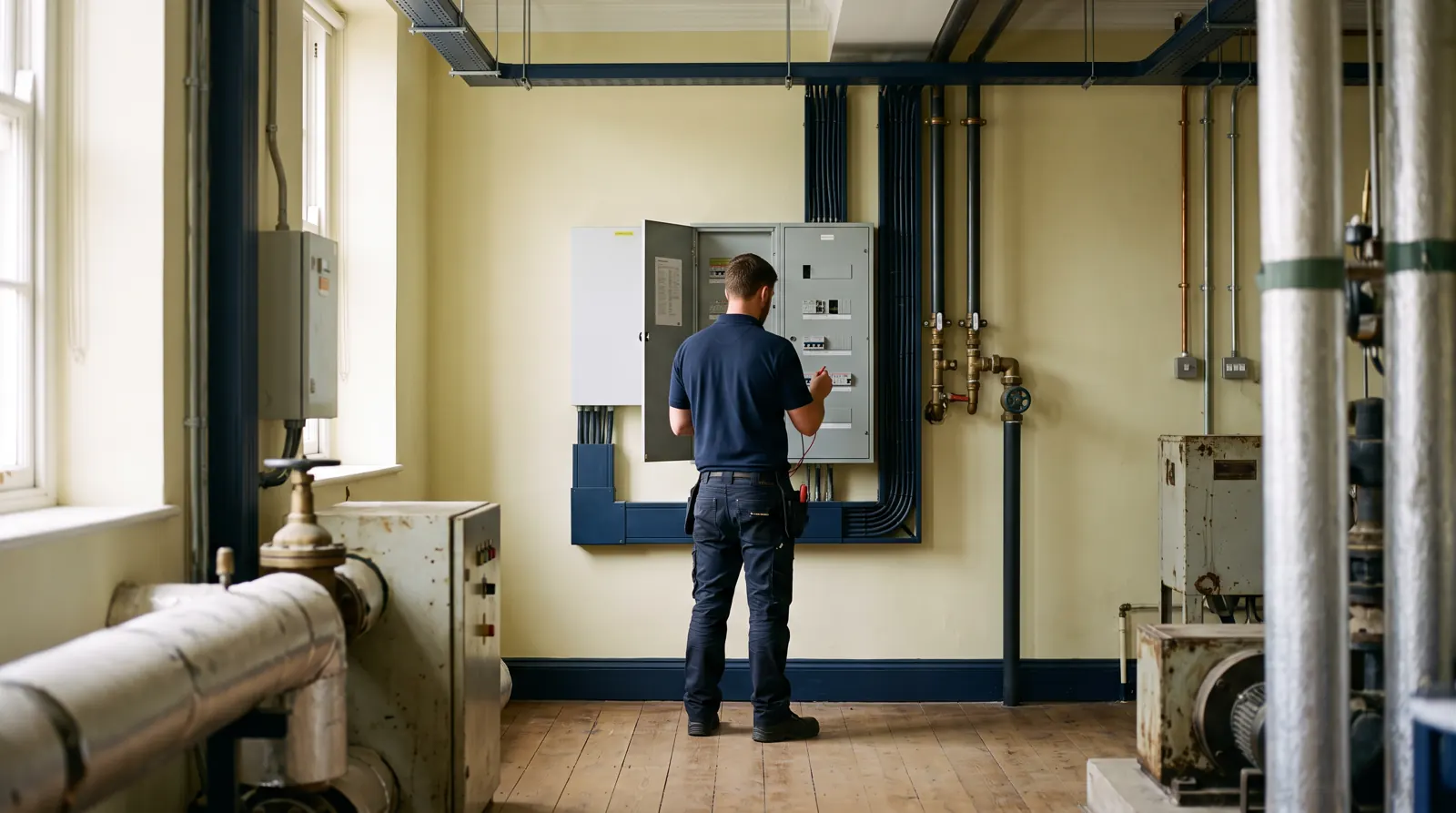

Electrical compliance for Maidstone landlords and businesses
We provide EICR inspections, remedial coordination and ongoing electrical compliance management from £120 per inspection. Maidstone and surrounding Kent towns. Guaranteed completion of remedial work within agreed timescales and issued NICEIC/qualified electrician certification for every inspection.
What the law requires
Under the Electrical Safety Standards in the Private Rented Sector (England) Regulations 2020, landlords are required to have an electrical inspection and testing report (EICR) carried out by a qualified person at least every five years and before a new tenancy starts. We can provide reports, remedial records and dated certification to help you evidence compliance.
You must give an existing tenant a copy of the EICR within 28 days of the inspection, provide a new tenant with a copy before they occupy the property, and supply a copy to the local authority within seven days if they request it. These records help demonstrate compliance with the Regulations and support tenant rights.
If an EICR records C1, C2 or FI observations, the landlord is required to arrange remedial work within 28 days, or sooner if the report specifies a shorter timeframe; the Regulations do not prescribe specific contractors, but remedial work should be carried out by a competent person. We can provide written confirmation of completed remedial work for tenants and the council. Non‑compliance can lead to local authority action, including financial penalties that in some cases may be up to £40,000 per breach.
Social housing duties
Social landlords should prepare for the electrical-safety duties set out in primary legislation and secondary instruments being brought in from late 2025; the current draft places requirements on new tenancies from 1 November 2025 and on existing tenancies from 1 May 2026, with the first inspections often expected by 1 November 2026, but landlords must check the final enacted dates and exact scope in the confirmed legislation before relying on them.
We can help you build an auditable programme — including property lists, access records, inspection certificates, remedial-action records, completion evidence and escalation logs — but landlords should not assume any particular provider’s template replaces the need to comply with the statutory requirements and approved guidance in force at the time.
Landlord-supplied electrical appliances commonly require periodic checks; draft provisions and sector guidance indicate checks at five-year intervals for supplied appliances in some contexts, but landlords should verify the precise obligations and any exemptions in the final regulations and guidance.
From 30 November 2026, draft proposals under Awaab’s Law Phase 2 add electrical hazards to the issues it addresses; where there is an immediate danger, landlords will be expected to act promptly (for example by following their hazard-reporting procedures and taking emergency action), but you should confirm the precise response times and legal duties in the enacted provisions.
Clear tenant information, reliable contact routes and documented outcomes reduce risk in practice; we can support planned visits and help preserve evidence that obligations were met, but such services do not change the statutory duties or remove the need for landlords to follow the law and official guidance.
Commercial fixed wire testing
Commercial fixed wire testing requires a documented programme tailored to your premises. Although there is no statutory EICR interval for business premises, the Electricity at Work Regulations 1989 require that electrical systems are maintained to prevent danger. We will establish suitable test intervals based on your premises, electrical load, operating environment, equipment and historical findings. Typical reference intervals — five years for offices, three years for industrial premises and annual for higher-risk environments — derive from IET Guidance Note 3 and are guidance, not legal mandates.
Our programme provides a complete audit trail: scheduled inspection dates, circuit schedules, observations, remedial actions and completion evidence are all recorded and retained for review. We deploy appropriate test technology and structure work to minimise operational disruption, prioritising out-of-hours access wherever practical. A current EICR is often requested by insurers, licensing bodies or landlords; we will maintain clear, up-to-date documentation to support compliance and third‑party review.
What it costs
We provide fixed written quotes before planned maintenance so you know the scope, testing and certification costs up front. Below are our standard prices and what each job includes.
| Job | Price | What's included |
|---|---|---|
| Commercial EICR | £30–£50/circuit | Testing, report, VAT |
| PAT testing | From £1.50/item | Labels, records, VAT |
| Fault finding | £80/hour | Investigation and testing |
| Emergency work | £120/hour | First-hour minimum, VAT |
Not included: plaster repairs, decoration, asbestos removal, DNO supply-upgrade charges, scaffold or access equipment.
Portfolio and multi-site work
For multi-site portfolios we maintain a site-by-site register of assets and compliance records, including EICRs, remedial works, PAT records where required by your risk assessment, and certificate expiry dates associated with each location.
Our initial surveys assess equipment condition, installation age, access constraints and known electrical risks. We identify priorities, record observations precisely and produce a written maintenance programme that supports your statutory duty to manage electrical safety.
Each site is supplied with traceable documentation: inspection reports, test results, certificates and quotations for any recommended corrective work. Where multiple contractors are engaged, we facilitate contractor coordination by defining electrical scopes, confirming isolation responsibilities and retaining all relevant records. We schedule work to minimise disruption — including out-of-hours and weekend operations where necessary — to preserve business continuity.
The result is a consistent audit trail across your portfolio, reduced risk of missed compliance dates and clear information for budgeting remedial works and planned asset replacement.
Out-of-hours and minimal-disruption working
To minimise operational disruption, we schedule planned electrical maintenance around your trading hours, including early mornings, evenings and Saturdays where appropriate. We agree access windows, isolate only affected circuits where safe, and coordinate works with your responsible person before attendance.
For night shifts, we assess lighting, lone-working, security, noise and emergency arrangements in advance. Our risk assessment and method statement identify controls for occupied premises, plant rooms, shared areas and restricted zones. Staged access lets us complete inspections, testing and minor remedial work in manageable sections, reducing interruption to staff, customers and critical operations.
We confirm planned isolations, permit requirements and site rules beforehand, so there’s no uncertainty about who may authorise shutdowns. If testing identifies an immediate danger, we’ll explain the risk and agree proportionate action without compromising safety.
Documentation you receive
Documentation provides a clear audit trail for every planned maintenance visit. We issue records promptly, so you can evidence inspections, decisions and remedial priorities to insurers, auditors or dutyholders. Our documentation supports effective Record retention and helps you track assets across your Maidstone premises.
- Visit report stating scope, dates and engineer findings
- Asset register updates, including consumer unit and circuit references
- Test results, observations and risk-coded defects
- Photographs where they clarify condition or access constraints
- Certificates and a Handover pack for completed remedial work
We’ll identify anything requiring urgent action separately from items that can be planned within your maintenance budget. Where defects affect safety or compliance, we record the limitation, recommendation and responsible next step. You’ll receive clear, dated documents that support informed decisions without overstating risk or obscuring outstanding actions.