What this costs and how fast we can help
From £80/hr, we typically trace most fuse box or RCD faults within 1–2 hours and provide a fixed written quote before any repair work begins.
For RCD trips, repeated fuse box faults or a loss of power in Maidstone, we’ll trace the cause safely and explain the fixed price before work starts. Our response times depend on demand; we operate a 24-hour emergency line and run planned visits Monday–Saturday, 7am–6pm.
Job prices - Fault finding: £80/hr - Out-of-hours fault finding: £120/hr (first hour minimum)
Most faults are traced within one to two hours. Prices include labour, parts, testing, certification and VAT where required. We’ll isolate unsafe circuits, test the consumer unit and protective devices, then provide a written quote before repairs. We don’t rely on temporary fixes where a permanent, compliant repair is needed. The bill won’t exceed the agreed quote.
Excluded items - Making good plaster or decoration - Asbestos removal - DNO supply charges - Specialist access equipment
The faults we are called out for most
- Your RCD (safety switch) won’t reset after tripping.
-
Usually means there’s an earth leakage or a faulty appliance somewhere that needs finding and fixing.
-
Your power keeps cutting out in one room or on one circuit.
-
Often caused by a tripping breaker from an overload or a short that needs repair.
-
Sockets or lights suddenly lose power with no warning.
-
Could be a loose connection or damaged cable that’s failed and needs urgent attention.
-
Lights flicker or dim when you switch on the kettle, toaster or other appliances.
-
Typically a circuit is overloaded by high-demand appliances on the same ring or radial circuit.
-
An outdoor light or socket works intermittently after rain or damp weather.
-
Usually moisture getting into fittings, switches or external equipment.
-
Switches, sockets or the fuse box look scorched, rusty or have missing cover plates.
-
Signs of overheating, corrosion or obsolete parts in the consumer unit — needs prompt professional assessment.
-
Old rubber-insulated or aluminium wiring in the house worries you or looks brittle.
-
That’s ageing wiring (VIR/rubber or aluminium) common in older properties and can be unsafe if not replaced.
-
A specific socket or appliance trips the same breaker every time you plug in or use it.
- Suggests a faulty appliance, damaged cable or a local fault at that socket needing repair.
Safe checks to try before you call
Before calling us, you can check whether the consumer unit has a tripped RCD or circuit breaker, unplug appliances on the affected circuit, and try resetting it once. Use the circuit labelling to identify which sockets, lights or fixed equipment may be affected. Keep hands dry, stand on a dry floor and only operate the consumer unit’s normal switches; don’t remove covers or touch exposed parts.
For appliance isolation, leave everything unplugged initially. If the RCD resets, reconnect appliances one at a time, allowing time between each, to identify a possible faulty item. Stop immediately if it trips again, smells of burning, feels hot or shows damage. Don’t repeatedly reset a tripping device, bypass an RCD, replace fuses yourself or investigate wiring. If it won’t reset, contact a qualified electrician promptly.
Note: There is a common misconception that homeowners are legally obliged to attempt all electrical fault-finding themselves; this is not true. You are not required by law to carry out repairs or investigate internal wiring — if in doubt or if the fault persists, the appropriate duty is to contact a competent, qualified electrician.
Aluminium Wiring in Post-War Estates
Some post-war homes in Shepway, Park Wood and Senacre may have aluminium conductors, which need careful assessment when an RCD trips or circuits show intermittent faults. We won’t advise tightening connections yourself: aluminium can creep, oxidise and overheat where unsuitable terminals or mixed-metal joints exist.
| Concern | Safe professional action |
|---|---|
| Aluminium corrosion | Inspect terminations and use approved connectors |
| Bonding upgrades | Verify earthing and main protective bonding |
We’ll isolate supplies where necessary, inspect accessible connections and confirm the installation meets BS 7671 requirements. Aluminium wiring isn’t automatically unsafe, but damaged insulation, poor joints or inappropriate accessories can create shock and fire risks. If faults persist, leave the circuit off and arrange a qualified electrician.
How we trace a fault
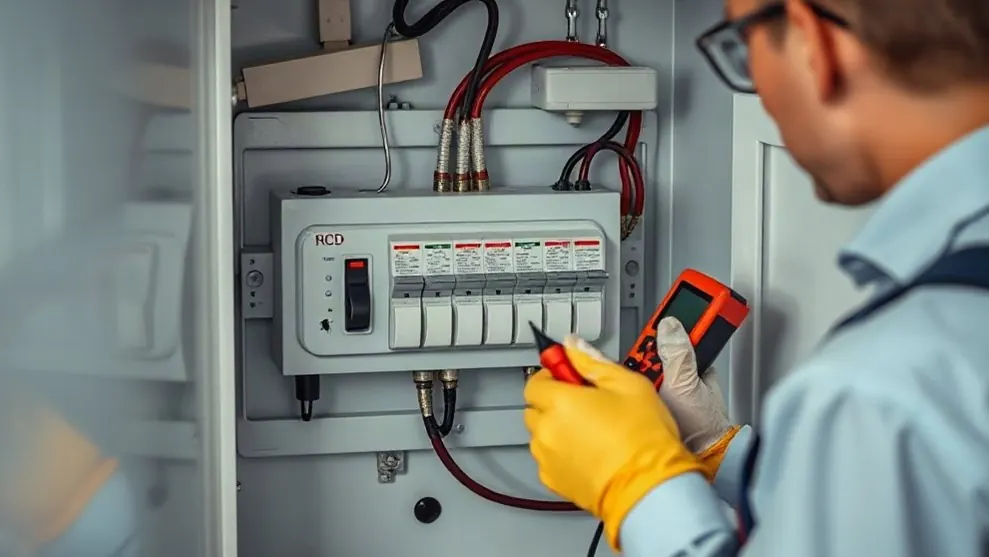
We trace an RCD or consumer unit fault by first making the installation safe, then isolating circuits and testing methodically to identify whether the cause is a connected appliance, damaged cable, water ingress, a faulty accessory or a defect within the consumer unit.
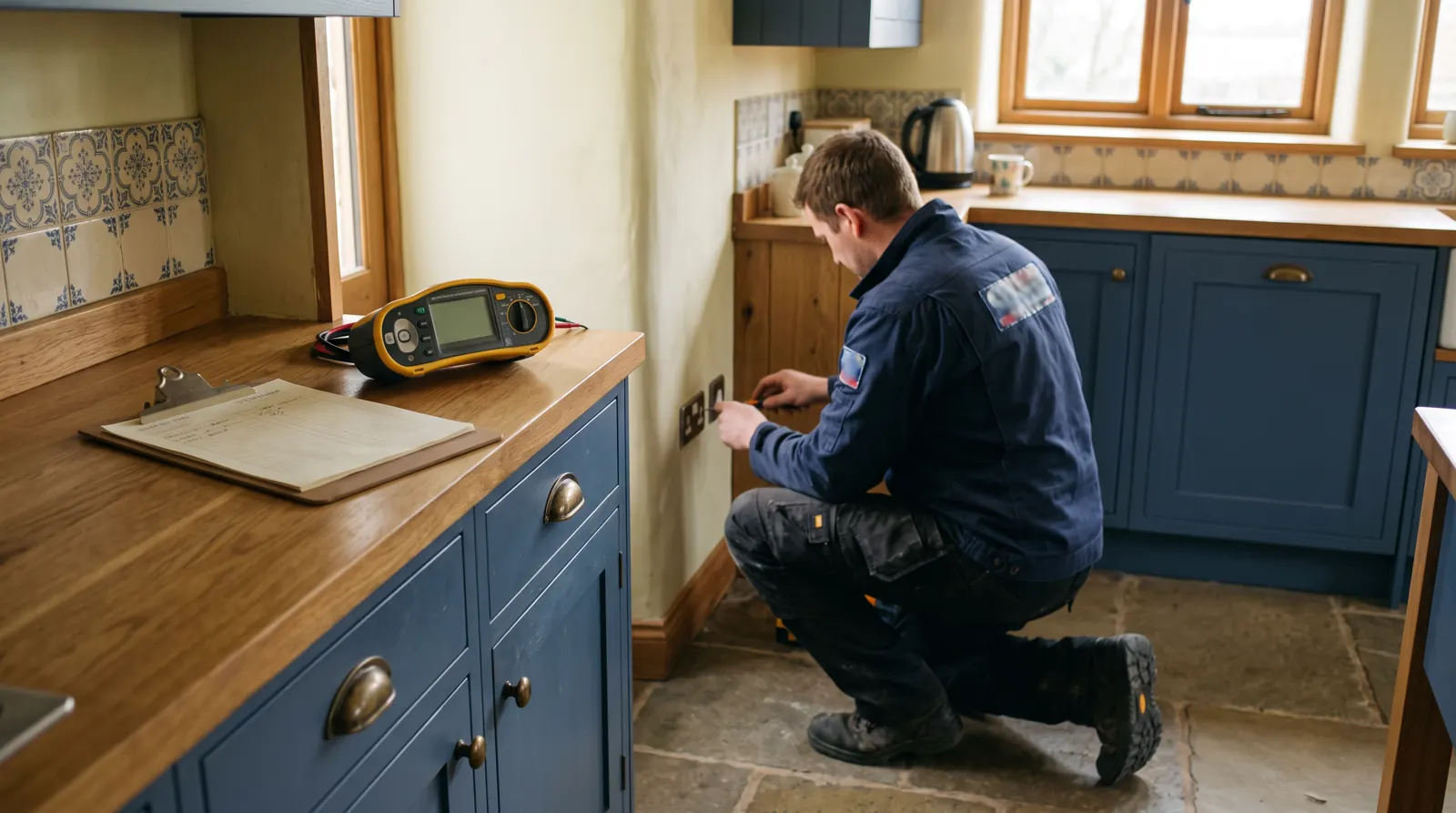
After confirming safe isolation, we inspect for heat damage, loose connections, contamination and signs of moisture. We use breaker mapping to establish what each protective device supplies, then disconnect loads where necessary and test each circuit separately. Insulation testing helps identify leakage between conductors or to earth, while continuity, polarity and RCD tests confirm the circuit’s condition and protective operation. We don’t repeatedly reset a tripping RCD or bypass safety devices. If the fault involves older VIR, rubber or aluminium wiring, we assess its condition carefully and explain the findings clearly.
What it costs to put right
Once we’ve identified the fault, we’ll give you a fixed written price before any work starts so the bill won’t exceed the quote. Fault finding is charged at £80 per hour (most faults traced within one to two hours) and VAT, compliant parts, labour, testing and certification are included where required.
| Job | Price | What's included |
|---|---|---|
| Fault finding | £80/hr | Testing and diagnosis |
| Consumer unit replacement | £500–£700 | Parts, labour, testing, certificate, VAT |
| Partial rewire | £1,200–£3,000 | Safe replacement work and certification |
| Extra socket | £55–£75 | Parts, labour, testing, VAT |
| Not included: plastering, decoration, asbestos removal, DNO charges and access equipment; out-of-hours emergency response is £120 per hour (first hour minimum). |
When it is an emergency instead
Treat a burning smell, smoke, a crackling consumer unit, repeated RCD tripping, electric shock or water entering electrical equipment as an emergency: if it is safe to do so, switch off the supply at the main switch, do not touch damaged or wet equipment, keep everyone away from the affected area and call our 24‑hour emergency line. Never reset a tripped device repeatedly.
If there is a power outage affecting neighbouring properties, check the local network operator’s updates before assuming your installation is at fault. If loss of supply is confined to your property, especially when accompanied by heat, smell or visible damage, a qualified electrician should inspect it promptly. Do not remove consumer‑unit covers or attempt repairs yourself.
If anyone is injured following an electric shock, call 999 immediately; otherwise use our emergency contacts for electrical attendance. We will, where appropriate and authorised, isolate faults, carry out tests safely and restore supply.
Note: it is a common misconception that a homeowner is legally required to isolate the supply themselves in every electrical emergency — in many cases the safest course is to make the supply safe if you can do so without risk, then contact a qualified professional or the network operator; specific legal duties depend on the circumstances and applicable regulations.
Older wiring around Maidstone
In Maidstone we commonly find older wiring that has reached the end of its safe service life in specific neighbourhoods. In Tovil and parts of the town centre, Victorian terraces built in the mid- to late‑1800s often contain VIR (vulcanised India rubber) or other rubber‑insulated cable. In the Park Wood area and some post‑war estates such as those in Allington and Grove Green, houses built in the 1950s and 1960s can still have aluminium wiring in some circuits. In these locations the historic insulation can become brittle, crack or lose insulating properties, which may allow leakage currents that trip an RCD. Where aluminium conductors are present in Maidstone properties we inspect terminals and connections carefully because they require correctly rated connectors and poor connections can overheat.
When we assess an installation in Maidstone we carry out inspection and testing tailored to the local stock: earthing and bonding checks for cottages and terraces in Barming and the town centre, circuit condition examinations in Tovil and Fant, and tests of protective‑device operation in Park Wood and the Allington and Grove Green estates. Period fittings in Maidstone properties — for example original switches in Victorian terraced houses in the town centre or early‑postwar consumer units in Grove Green — do not automatically prove the installation is unsafe, and the age of the housing (e.g. mid‑1800s terraces, 1950s semis) is not by itself proof of compliance with current standards. We advise clients in Maidstone households not to disturb concealed cables, remove consumer‑unit covers or repeatedly reset a tripping device. Where we find defects in a Maidstone property, we will explain whether targeted remedial work or a full rewire is the safer, proportionate option for that specific house or neighbourhood.